A Neighbor’s Contractor Knocked Down a Raleigh-Area Homeowner’s Fence and Cut Most of the Trees, on Land That Runs 60 to 100 Feet Past It
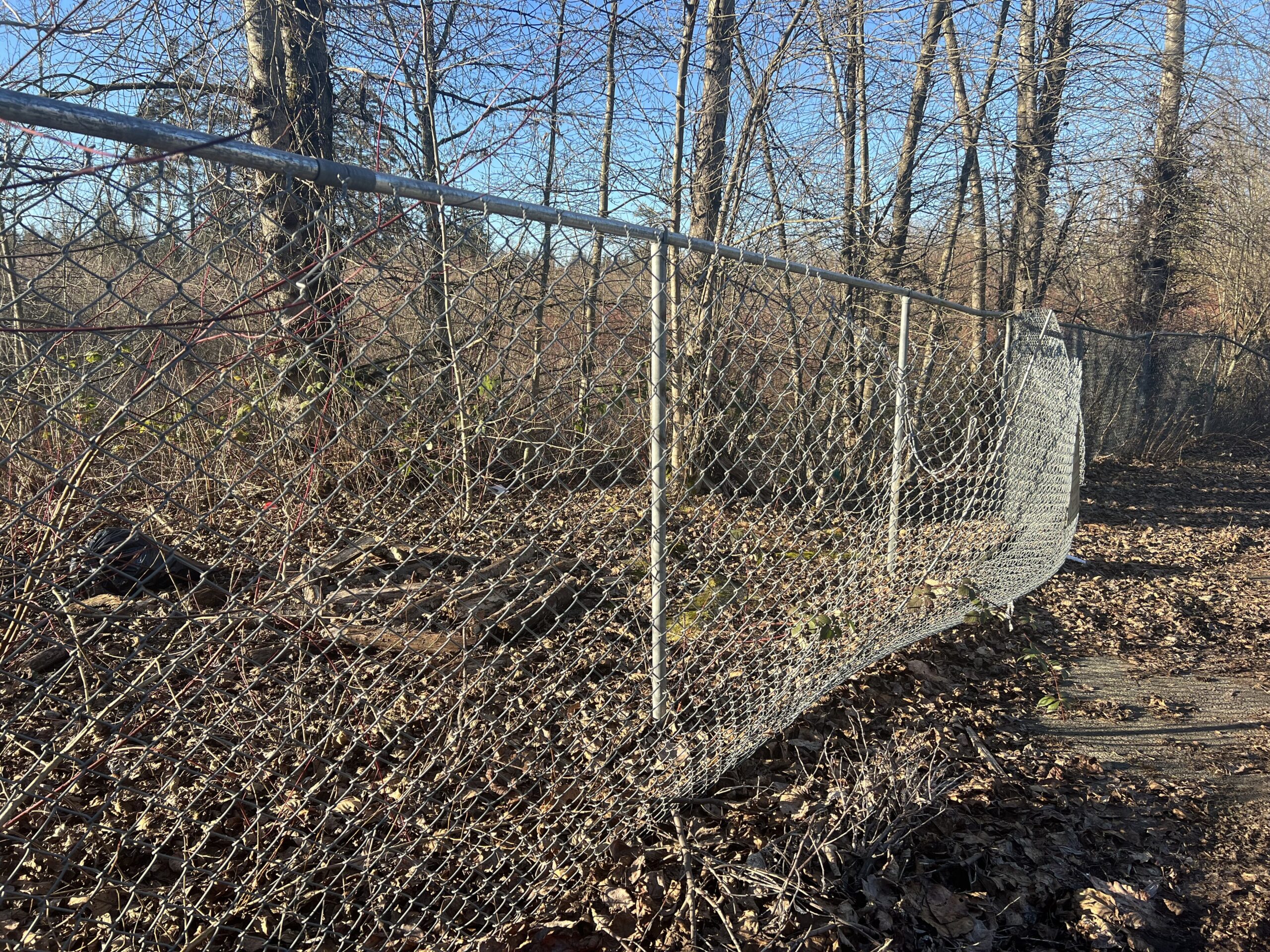
The property line sits 60 to 100 feet past the chain-link fence, according to a Raleigh-area homeowner, which puts the trees on the far side of that fence on the homeowner’s land, not the neighbor’s. Even so, the homeowner says a contractor hired by the neighbor came through the fence and cut down most of the trees on the property.
The account was written up by The Cool Down, in a story carried on Yahoo News and updated Jan. 14, 2026. The homeowner, who was not named, said the contractor “willfully trespassed on fenced-in property” and tore down chain-link fencing along the way. The homeowner then filed a police report.
Two Fences Down and the Trees Gone
The Cool Down reported that the neighbor’s contractor removed dozens of trees from the yard without permission. The homeowner put it more starkly, saying the crew cut down most of the trees on the property.
The visible chain-link fence was not the only thing lost. According to the homeowner, the real boundary is marked by a second fence well beyond the first, sitting 60 to 100 feet past the one in the photos. That second fence “marking that boundary was destroyed along with the trees,” the homeowner wrote.
That detail matters. A crew working from the visible fence line could have assumed the land on the far side belonged to the neighbor. A second fence deeper in the woods, marking where the property actually ends, makes that assumption much harder to defend.
Privacy Was the Reason for Buying
The trees were not just scenery. The Cool Down reported that privacy was “a huge reason” the homeowner bought the property in the Raleigh area in the first place, and that the privacy disappeared when the trees on the land were cut down.
Replacing a screen of mature trees is not quick. A young tree planted this winter can take many years to fill the space a decades-old tree left behind, which is why tree loss tends to hurt more than a broken fence that can be rebuilt in a weekend.
The story drew a familiar kind of response from readers who have dealt with property-line damage. Some predicted the neighbor would face a costly outcome once survey markers, fences and trees were all counted. Others urged the homeowner to move fast: get quotes for a new survey, replacement survey monuments and new fencing, and treat the trees as a separate, more complicated claim.
What North Carolina Law Says About Cutting a Neighbor’s Trees
North Carolina has two laws that speak directly to this kind of situation. Under the state’s civil timber statute, G.S. 1-539.1, a person who cuts, injures or removes trees on someone else’s land without permission can be liable to the owner for triple the value of the wood, timber, shrubs or trees. The same statute lets a contractor who was misled about property lines seek reimbursement from whoever hired them.
That last part is relevant here. If the contractor was told the cleared area belonged to the neighbor, the contractor may have a claim of its own against the neighbor who hired it.
Separately, the criminal statute G.S. 14-128 makes it a Class 1 misdemeanor for a person who is not on their own land to willfully damage or remove trees, plants or flowers without the owner’s consent. A police report, like the one this homeowner filed, is often the first record of that kind of claim.
Neither statute decides the outcome on its own. The Cool Down did not report how the police report was handled, whether the neighbor disputed the property line, or whether any case was filed.
Putting a Price on Trees That Are Already Gone
Fences and survey monuments have a replacement cost that a contractor can quote. Trees are harder. One commenter quoted by The Cool Down said the trees would need an arborist with credentials from the American Society of Consulting Arborists and a tree appraisal qualification, ideally one who specializes in tree appraisal and real estate impact.
Consulting arborists in that group offer appraisals and expert testimony on tree disputes, according to the organization. Their reports can estimate what the trees were worth, which matters most in a state where the civil penalty can be triple that value.
Boundary evidence is the other half. North Carolina licenses land surveyors through the North Carolina Board of Examiners for Engineers and Surveyors, which offers a public license lookup. A new survey from a licensed surveyor, showing exactly where the line runs relative to both fences, is the document that ties the cleared ground to the right owner.
The site has covered similar cases, including a tree crew that cleared young trees on the wrong side of a property line and a $4,000 spruce bill a neighbor said he could not pay.
Steps Homeowners in Similar Spots Are Advised to Take
The Cool Down’s own advice was straightforward: document property lines, photograph landscaping before any neighbor’s project begins, and learn the local rules on trees and trespass.
In practice, that means keeping a copy of the most recent survey, taking dated photos of tree lines along every boundary, and putting any objection to a neighbor’s project in writing before the work starts. When damage has already happened, photos of the stumps, the downed fencing and any missing markers, taken as soon as possible, give an arborist and a surveyor something to work from.
For this Raleigh-area homeowner, the trees are already gone. What remains is the paperwork: a police report, a survey line that sits 60 to 100 feet past the fence, and a state law that puts a steep price on cutting trees that belong to someone else.
This article was produced with AI assistance and edited for accuracy against the sources linked above.
Image: PinchyCC – CC BY-SA 4.0/Wikimedia Commons