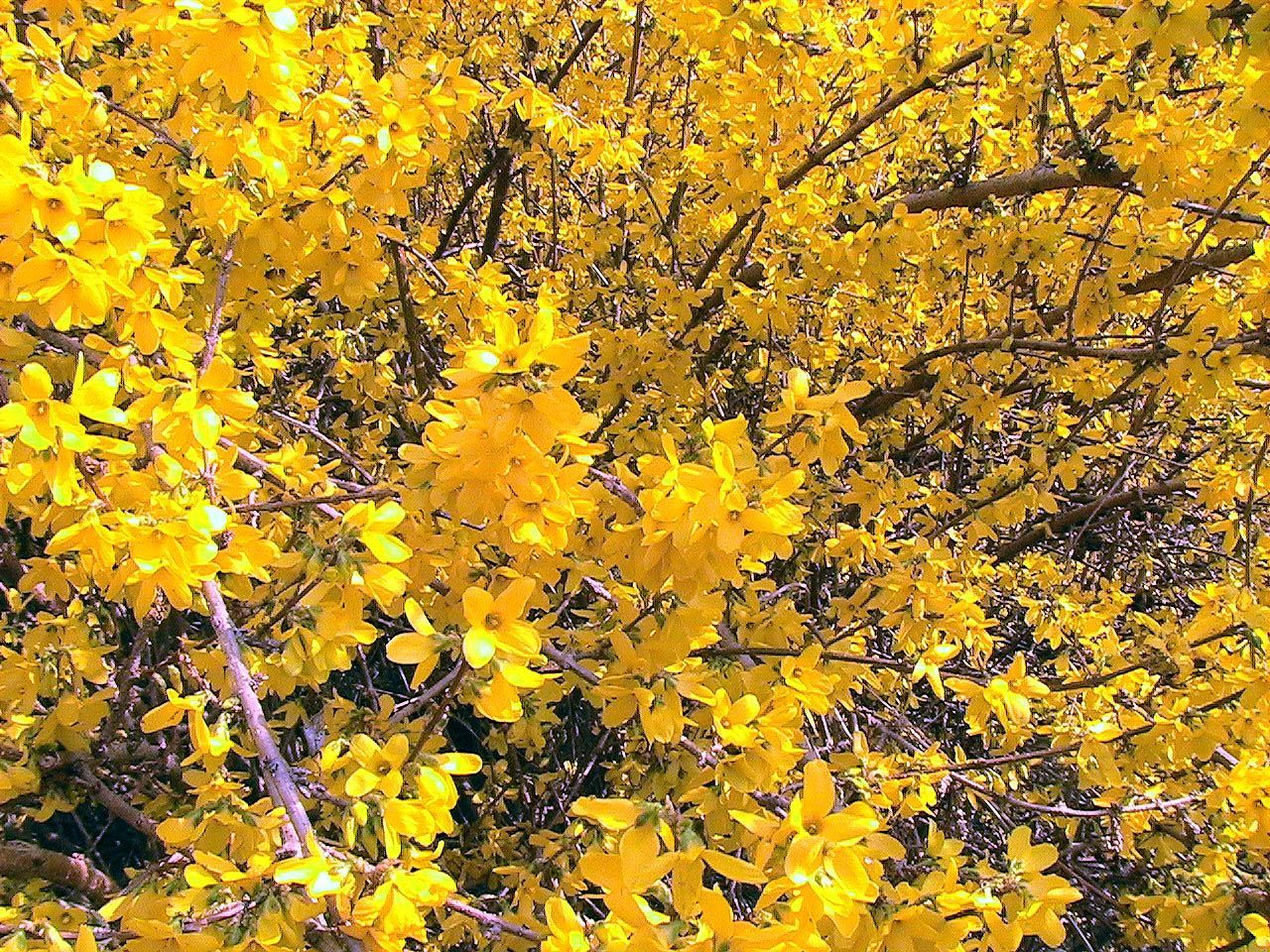
Pruning Forsythia and Azaleas in November Cuts Off Next Spring’s Flowers, N.C. Extension’s Shawn Banks Says, While Evergreen Hedges Can Wait Until After the First Frost
Next spring’s forsythia and azalea flowers are already on the shrub. They formed over the summer and fall, and they sit through winter as buds waiting to open. That is why Shawn Banks, county extension director for N.C. Cooperative Extension in Carteret County, warns that pruning these shrubs in fall removes those buds and reduces the spring bloom.
Banks draws a clear line between shrubs grown for their spring flowers and those grown mainly as greenery. Evergreen hedge, screen and foundation plants, hollies included, can be pruned once they go dormant after the first frost. Other extension services name a longer list of shrubs to leave alone now and explain when they should be cut instead.
Which Shrubs Already Carry Next Year’s Flowers
Banks names azaleas, forsythia and Chinese fringe flower as plants that flower on old wood. Because their buds are already set, any branch removed in fall takes its flowers with it.
Purdue Consumer Horticulture gives a broader list of shrubs best pruned soon after flowering: flowering almond, cherry and plum, beautybush, chokeberry, cotoneaster, deutzia, forsythia, fringetree, lilac, mockorange, flowering quince, rhododendron and azalea, spirea, viburnum and weigela. Purdue explains that these shrubs set their flower buds the previous fall, so even late-winter pruning removes some or all of that year’s spring flowers.
Penn State Extension Master Gardener Barb Ryan, writing in a Penn State guide to pruning flowering shrubs, uses mid-June as a rough dividing line. Shrubs that bloom before then form their buds on the previous season’s growth. Her examples include lilac, azalea, forsythia, fothergilla, kerria, mockorange, rhododendron and weigela.
Why Fall Cuts Cause Trouble Beyond Lost Flowers
Losing flowers is not the only risk. Ryan writes that pruning stimulates new growth, and growth produced in late summer or fall is vulnerable to winter injury. The University of Maryland Extension gives the same reason for avoiding fall pruning, saying new growth will not have time to harden off before winter, and places the window to avoid at roughly August through late October.
Banks’ advice on timing for evergreens follows from that. He says most plants are dormant by mid-November, and pruning then will not trigger immediate bud growth. In Carteret County, on the North Carolina coast, he puts the first frost around November 14, give or take a week or two, so the safe window for hedges opens later in warm areas than in colder ones.
When Spring Bloomers Should Be Cut Instead
The right time for lilac, forsythia and the rest is right after they finish blooming. Maryland Extension says spring-blooming shrubs such as forsythia, azaleas, rhododendrons and lilacs should be pruned right after flowering, which it defines as before the end of June. Richard Jauron of Iowa State University Extension says pruning then lets gardeners enjoy the flowers and gives the shrub time to set buds for the following year. For a healthy, well-kept shrub, he says only light to moderate pruning should be needed.
Overgrown shrubs are the exception. Jauron says neglected lilacs and forsythia can get rejuvenation pruning in late winter or early spring, around March or early April, but warns that heavy pruning then may reduce or eliminate flowers for two or three years. Ryan describes the same trade-off, saying forsythia, lilac and spirea can be cut to the ground in early spring when they have stopped flowering, with blooms delayed for several years.
A gentler option spreads the work out. Purdue describes renewal pruning over three years, removing one-third of the oldest, largest stems at ground level each year. For a shrub with 15 stems, that means taking out five a year, and after three growing seasons no stem is more than 3 years old. Ryan adds that renewal cuts should take no more than one-third of the stems at a time.
Getting Ready for the Spring Cut
Winter is a good time to plan the job and check the tools, even if the cutting waits. Purdue notes that hand shears handle branches up to 1/4 inch, lopping shears up to 1 1/2 inches, and anything larger calls for a pruning saw.
Ryan also points out that pruning paint is unnecessary, because cuts seal naturally. Maryland Extension suggests removing stems thinner than a pencil during renewal pruning and making heading cuts about one-fourth inch above an active bud or branch.
With the leaves gone, November also makes it easier to see the structure of a deciduous shrub and pick out the oldest, thickest stems. Noting them now makes the after-bloom cut faster when the time comes.
What Can Be Pruned This Month
Not everything has to wait. Banks says deciduous trees and shrubs can be pruned after they go dormant, with flexible timing, though young plants are more prone to cold injury and are better left until February or March. Evergreen hedges and screens, including hollies, can be shaped after the first frost, since their flowers are not the main reason they were planted.
Maryland Extension’s renewal guidance also notes that renewal pruning of lilac and forsythia belongs in late winter or early spring, before new growth appears, not in November.
The simplest test before picking up the pruners is to ask when the shrub blooms. If it flowers in spring, its buds are already in place, and the cut is better saved for after the flowers fade. Bigleaf and oakleaf hydrangeas follow the same rule, as Illinois Extension explains in its guide to pruning hydrangeas by type. Fruit trees run on a different calendar, with apples and pears open to pruning from November while plums and cherries wait, and oaks have their own winter pruning window tied to oak wilt.
This article was produced with AI assistance and edited for accuracy against the sources linked above.
Image: C. E. Price – Public domain/Wikimedia Commons