A Homeowner Paid Three Neighbors $1 Each for Their Leaves After the County’s Leaf Contractor Left Most of His Curb Pile Behind
A homeowner at the end of a cul-de-sac thought he had cleared his fall leaf pickup with the company that runs his county’s leaf collection. The truck came, took a fraction of the pile, and left the rest at the curb. What he did next, as reported by Cheezburger’s FAIL Blog on Nov. 11, was pay three of his neighbors $1 each for their leaves.
The deal was not a joke to him. It was his way of meeting the company’s own rule that every leaf on a subscriber’s curb has to belong to the subscriber.
A shared curb and a pile that only half went
According to the FAIL Blog write-up by managing editor Brad Dickson, the homeowner’s lot runs about 200 feet deep and holds somewhere between 40 and 50 oak trees, plus two sugar maples out front. Most of the leaves came down within two days, covering roughly half an acre three to six inches deep.
His own stretch of curb is short, only about 30 feet, and a rule requiring piles to sit at least 15 feet from a mailbox leaves him with about 15 usable feet. So he called the company, which the article describes as the largest lawn service in the area and the holder of the county’s leaf contract, and asked whether he could spread the pile along a longer shared curb. He was told it was “no problem.”
When the truck arrived, the crew picked up only the part of the pile directly in front of his house. The driver judged the rest to be in front of a neighbor’s property and left it. A second call to the company, the homeowner said, got him a reply that those were the rules.
The rules he decided to follow to the letter
The pickup rules laid out in the article are strict. Leaves have to sit within 5 feet of the subscriber’s curb, on the road, and at least 15 feet from a mailbox. Each household needs its own subscription, and neighbors cannot combine piles. The leaves must belong to the subscriber and come from the current year, and the trucks use GPS to identify which homes have paid.
Reading that list, the homeowner saw an opening in the line about ownership. He went to three neighbors and paid each of them $1 for their leaves. He later clarified that it was $1 per neighbor, not per leaf. With the leaves now his, he moved everything into his own 15-foot by 5-foot curb space and kept piling.
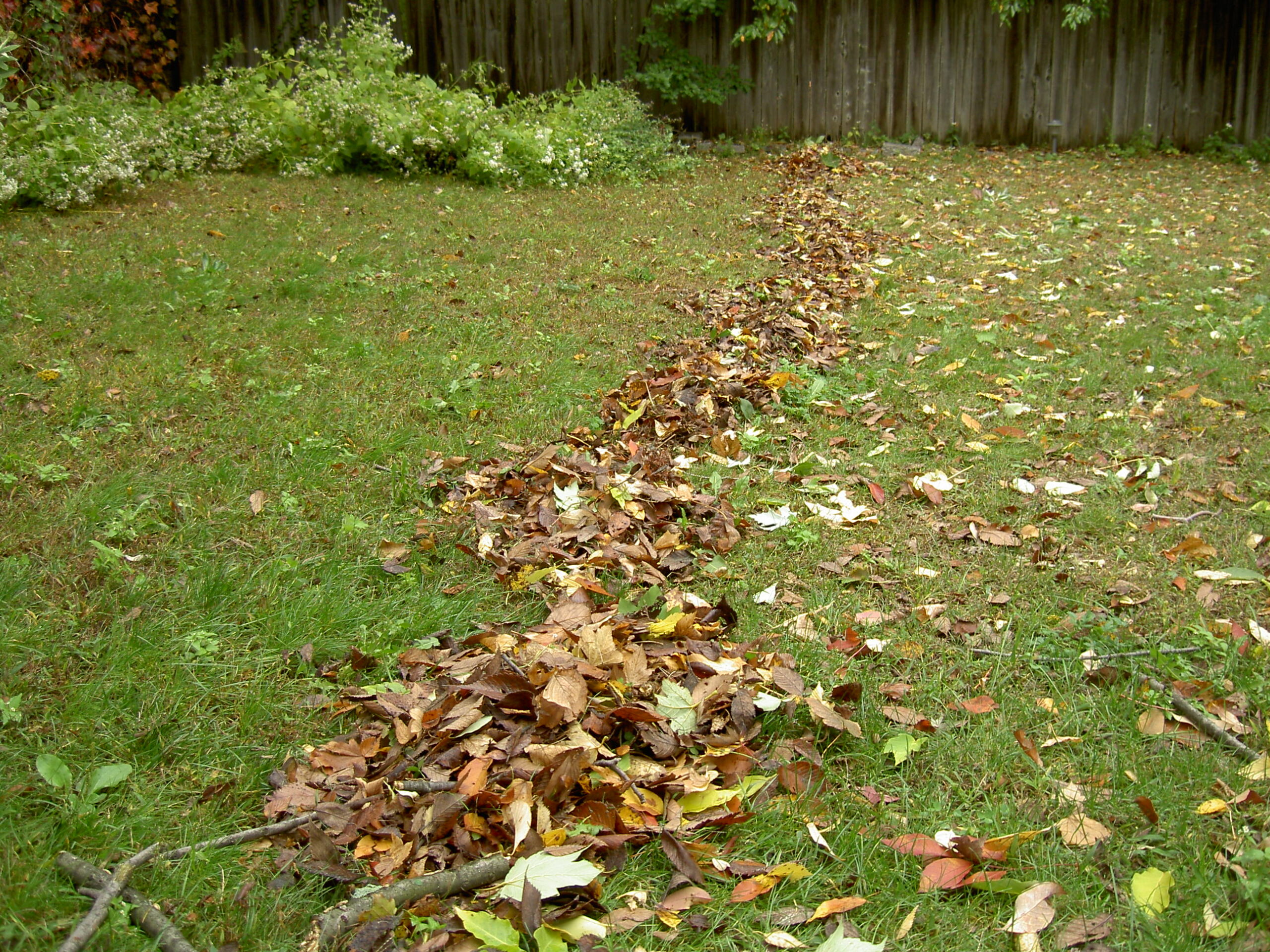
He used a snow shovel to fling leaves up onto the heap. The article put the finished pile at more than 12 feet tall, while the homeowner’s own note on his first-day photo put it closer to 10 feet.
How the truck handled it
On collection day, the truck could not take the pile in one load. According to the write-up, the crew had to drive away to dump what they had, come back and load again, and do that twice before the curb was finally clear. The article says the company eventually collected the entire pile.
The FAIL Blog piece was written up from the homeowner’s own online account of the episode. The article did not name the county or the lawn company.
Why a 50-oak yard turns into a contract dispute
For homeowners with mature trees, fall leaves are a volume problem before they are anything else. The U.S. Environmental Protection Agency’s most recent yard trimmings data counts 35.4 million tons of yard trimmings generated in a single year, about 12.1% of all municipal solid waste. About 22.3 million tons of that was composted, and 10.5 million tons went to landfills.
That volume is why towns and counties set pickup rules about pile placement, curb space and subscriptions, and why a yard like this one can overwhelm a program built around a typical lot. Some homeowners skip the curb entirely for at least part of the leaf fall. UConn Extension’s guidance on leaf disposal and mulch mowing says mulching mowers can chop up to 6 inches of leaves at a time, and that after each pass no more than 20% of the lawn should still be covered by leaves.
UConn Extension also notes that a 2-inch layer of leaves mulched into turf over the fall adds roughly 150 pounds of nitrogen, 20 pounds of phosphorus and 65 pounds of potassium per acre. In landscape beds, it suggests a 4- to 6-inch layer of leaves around plants, with a 6-inch circle kept clear around each plant’s crown.
Purdue turfgrass extension specialist Aaron Patton has written that mulched oak and maple leaves do not harm soil or turf and often improve soil structure, and that mulching does not increase thatch, disease or weeds. He adds one limit: when leaves are thick enough to hide the grass, raking is the better choice, because heavy layers can shade and kill turf.
Michigan State University Extension gives similar advice, suggesting the mower deck be set to its highest setting and noting that on heavy weeks it may take two mulching sessions to keep up.
What the episode shows about leaf pickup programs
None of that would have handled 40 to 50 oaks on its own, which is why this homeowner relied on the pickup program in the first place. His story turned on a single line in the rules. The company said the leaves had to be his, so he bought them, for $3 total, and then put every one of them where the rules said they should go.
Leaf rules vary widely from place to place. In Wisconsin, Green Bay and De Pere only take loose piles from the terrace, and in Kansas, blowing leaves into the street can cost Wichita homeowners $371.50. Homeowners with subscription or contracted collection can usually find the exact placement rules on the program’s own page, including how far piles must sit from mailboxes, whether neighbors can share a curb, and how many loads a single stop includes. Checking them before the leaves fall is far easier than arguing about them with the truck at the curb.
This article was produced with AI assistance and edited for accuracy against the sources linked above.
Image: Dan4th Nicholas – CC BY 2.0/Wikimedia Commons