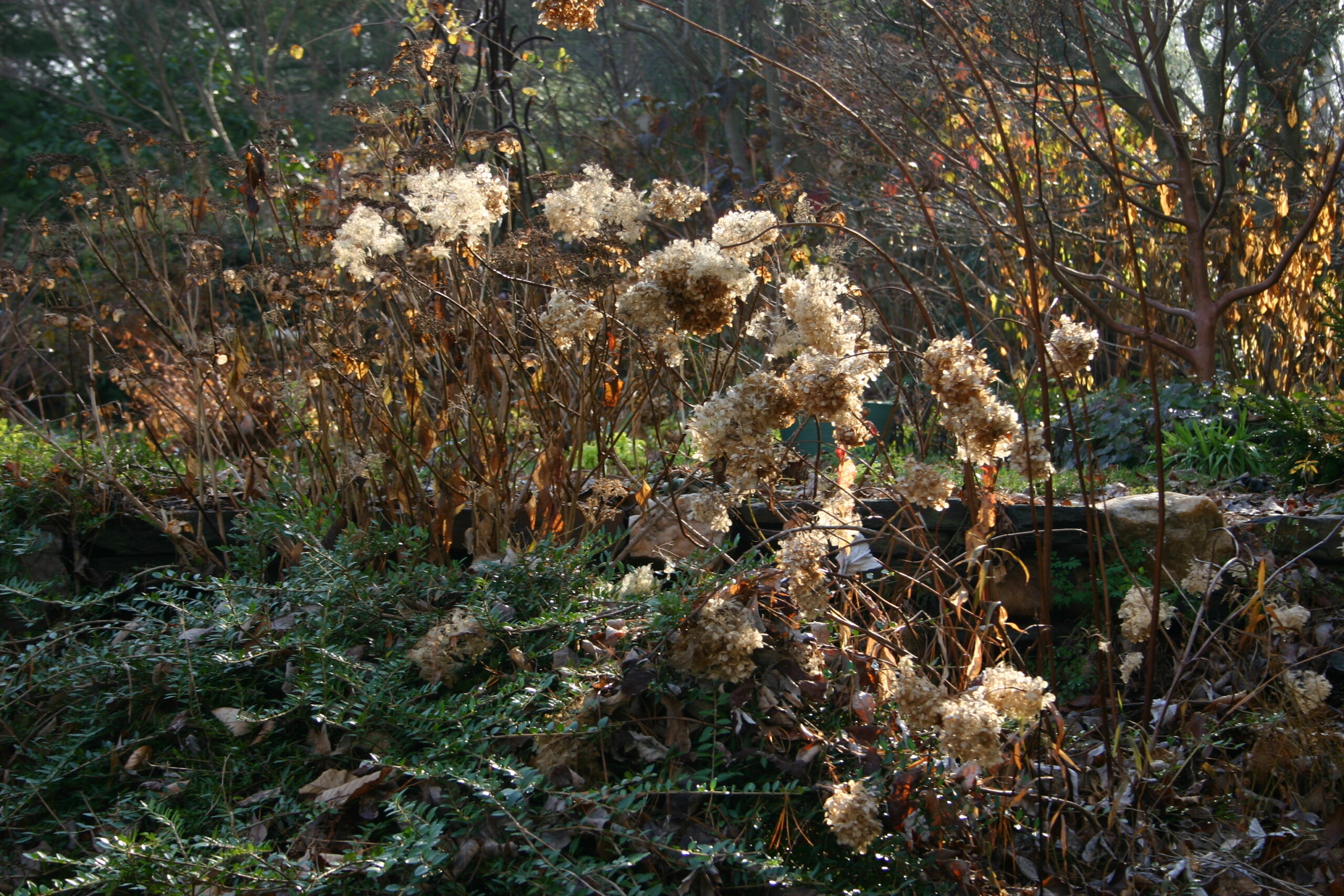
Bigleaf and Oakleaf Hydrangeas Get Burlap Cages on Four Stakes in Late November to Save Next Year’s Flower Buds, While Limelight Rarely Needs Any
In late November, once the leaves have dropped and the shrubs go dormant, bigleaf and oakleaf hydrangeas are the ones that earn a cage. Gardening Know How, in a Nov. 5, 2026 article by Mary Ellen Ellis, says four sturdy stakes wrapped in burlap protect the flower buds those plants carry through winter. Cold-hardy panicle types such as Limelight rarely need any insulation.
The split comes down to when each type sets its blooms.
Old Wood Is What the Cage Protects
Bigleaf (Hydrangea macrophylla) and oakleaf (H. quercifolia) hydrangeas bloom on old wood, meaning the flower buds formed the previous season and are already sitting on the stems. Gardening Know How says that makes them vulnerable to freezing, and that pruning them in November would remove next summer’s blooms.
Panicle (H. paniculata) and smooth (H. arborescens) types flower on the current season’s growth, so they tolerate frost better. The article lists Limelight and Bobo among the panicles that rarely need insulation, and Annabelle among the smooth types, though all three still benefit from steady moisture at the roots. Nikko Blue, the Cityline series and serrated mountain hydrangeas are named as cultivars that need bud protection in cold zones.
Other horticulture sources describe the same split. The Old Farmer’s Almanac, in a Catherine Boeckmann guide dated Oct. 7, 2026, says bigleaf, oakleaf and mountain hydrangeas bloom on stems grown the previous year, while panicle and smooth types bloom on current growth. It adds that bigleaf plants may need extra protection in exposed locations, since severe cold or late freezes can damage their flower buds, and that some newer reblooming varieties flower on both old and new growth.
Building the Burlap Cage
Gardening Know How says to drive four sturdy hardwood or metal stakes into the ground around the shrub, several inches from the branches. Burlap or jute is wrapped around the outside of the stakes and secured with zip ties or twine. The wrap shields buds from drying wind without pressing against them.
In extreme northern climates, the article suggests a wire fence cylinder loosely filled with pine needles or oak leaves. It warns against plastic tarps because they trap condensation. Flower buds on old-wood types can be damaged below 0 degrees Fahrenheit, it says, even when the roots of the plant are hardy to about zone 5.
University of New Hampshire Extension’s Yard and Garden Infoline gave similar advice in a December 2017 answer about Endless Summer hydrangeas. It says plants can be wrapped in burlap or chicken wire with the enclosure filled with leaves, and that the protection should stay until the danger of frost has passed in spring. The Infoline notes that the series is marketed as blooming on new wood and rated hardy to Zone 4, yet harsh New Hampshire winters often kill its flower buds.
What Not to Do Before Winter
The Infoline advises against pruning in late summer or fall, since that removes next season’s buds. Clemson Home and Garden Information Center, in a factsheet updated Oct. 31, 2025, says the most common reason hydrangeas fail to bloom is winter injury and advises against pruning after Aug. 1.
Gardening Know How also lists high-nitrogen fertilizer among things to avoid, because it forces soft growth that cannot harden off, along with clear plastic or non-breathable tarps and letting the roots dry out before the ground freezes.
Ruth Hayes of Gardeningetc, in a piece updated Nov. 14, 2022, recommends leaving dead flowerheads on through autumn and winter because they help protect the new buds lower on the stems. Pruning waits for late winter or early spring.
Water and Mulch Come First
Before any wrap goes up, Gardening Know How says hydrangeas should be watered deeply until the ground freezes. When rain is sparse, it recommends soaking the soil 8 to 12 inches deep every 10 to 14 days, prioritizing newly planted shrubs, and stopping once morning frosts freeze the soil.
A 3 to 4 inch layer of coarse mulch such as shredded bark or chopped leaves goes on top, with a 2 inch gap left around woody stems to prevent rot and rodent damage. The Almanac likewise says to protect the root zone with mulch after the soil cools.
Gardeners staking shrubs this month may also want the site’s roundup of a University of Maryland Extension November checklist, which covers stakes for shrubs.
Potted Hydrangeas Need More Help
Containers lose the insulation of the ground. Gardening Know How says potted hydrangea roots can be up to 20 degrees colder than garden soil. Pots are grouped along a sheltered south- or east-facing wall, raised off cold concrete, and wrapped around the pot body, not the topsoil. In zone 6 or colder, the article says to move pots to an unheated garage, shed or cold frame and check them monthly for moisture.
Gardeningetc agrees that potted hydrangeas of any type need the most help, since frozen compost and frost can damage roots and containers.
This article was produced with AI assistance and edited for accuracy against the sources linked above.
Image: “Hydrangea shrub winter” by User:SB_Johnny, CC BY-SA 3.0, via Wikimedia Commons