A Tree Officials Put at More Than 75 Feet and 15 Tons Fell Across Kurt Jensen’s Kennesaw Home in an October Storm. His Family Lost About 99% of What They Owned.
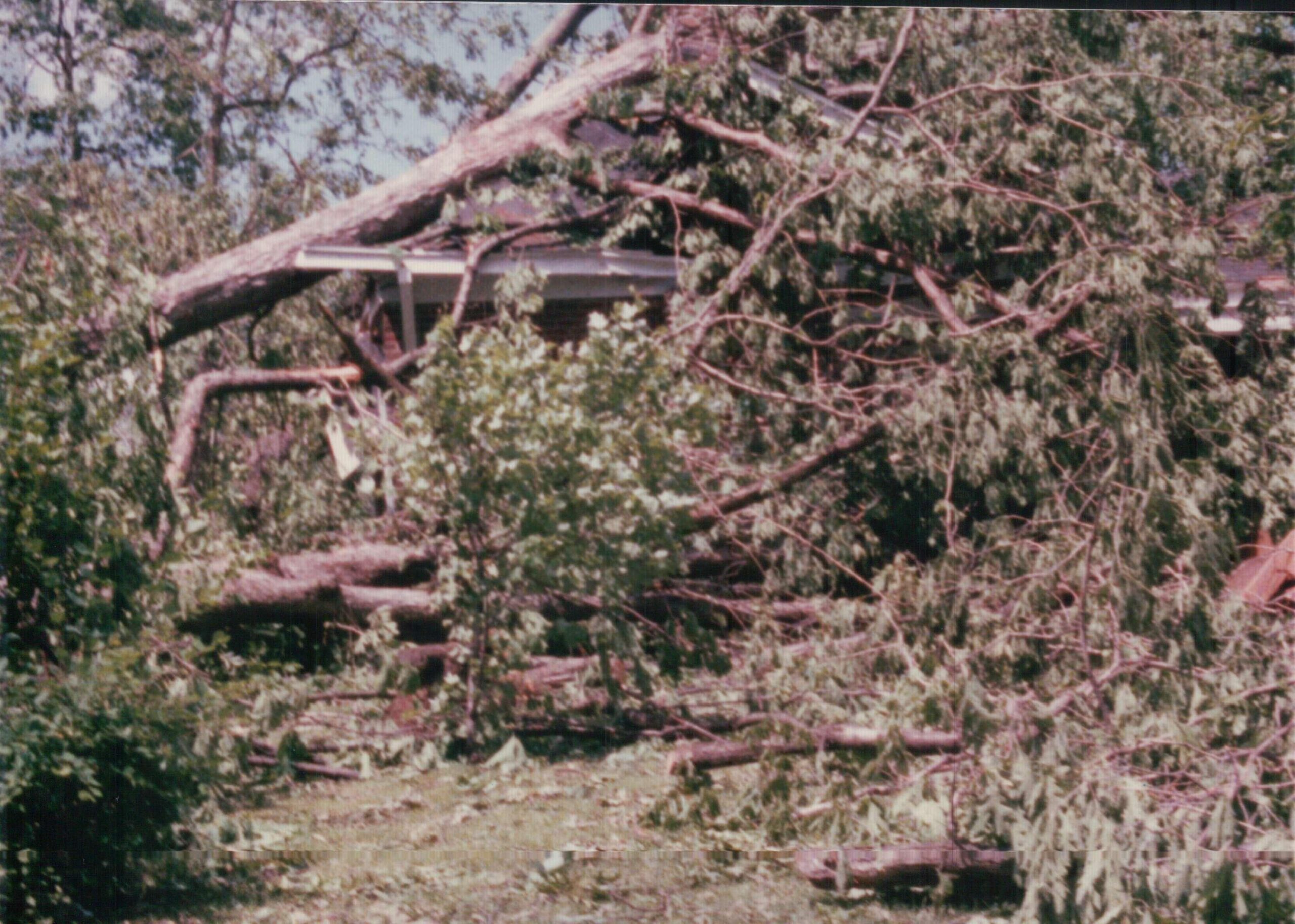
Kurt Jensen says the tree that came down on his family’s Kennesaw home was so big that officials told him it was over 75 feet tall and weighed more than 15 tons. Strong winds had been blowing the night before and into that October morning, and then it fell across the entire house.
Everyone got out. One person had minor injuries. But Jensen estimates the family lost about 99% of what they owned, and they had no insurance on the home when it happened.
‘Over 75 Feet and Over 15 Tons’
Jensen told WSB-TV’s Michele Newell that the tree looked diseased and was “dying.” It fell across the whole house and into the backyard, destroying the home where he lived with his wife and two children.
“They said it was over 75 feet and over 15 tons,” he said.
Neighbors Barbara and Hayward Kight saw it happen. WSB-TV’s report places the fall during an October storm, after a night of strong winds that carried into the morning.
About 99% of Their Belongings
The damage did not stop at the roof. Jensen estimated that about 99% of the family’s belongings were lost. Even things that might be saved, he said, would cost more to decontaminate than to replace.
The family had no insurance on the home at the time. Jensen said he had been comparing cheaper renter’s insurance options when the tree came down.
A GiveSendGo fundraiser has been set up to help them rebuild. For now, they are staying in a temporary house while they look for a safe rental. Jensen said they want to “stop living in like a temporary house.”
Why a Dying Tree Matters for Insurance
Being uninsured left the Jensens with nowhere to send a claim. But even families with coverage can run into trouble when a tree comes down, and the tree’s health often decides the outcome.
Fortune’s guide to storm coverage says a healthy tree that a storm drops onto a house is likely to be covered by home insurance, but that the coverage “won’t extend to dead or rotting trees.” The same guide says storm deductibles typically run 1% to 10% of a home’s insured value.
Who pays can also turn on fault. A Super Lawyers explainer says the manner in which a tree fell is the controlling principle in deciding who is responsible. A healthy tree blown over in a storm is usually treated as an act of nature, while an owner who knew a tree was dead may have to pay for the damage it does. The explainer also notes that debris removal coverage is often limited to roughly $500 to $1,000.
The ‘Act of God’ Fight
That line between nature and neglect is where many tree claims end up. In a 2015 case, when a neighbor’s hackberry fell on a Deer Park, Texas, home, the neighbor’s insurer first called it an act of God and denied the claim. A University of Houston consumer law professor told ABC13 that “almost any time someone has a tree issue, the defense is act of God.” The homeowner’s arborist later found ants, termites and root decay, and the insurer reopened its investigation.
The Texas Department of Insurance tells homeowners that insurance will only sometimes pay for a fallen tree, and that many policies cover damage from falling objects like trees. Its guide says to photograph the damage before moving the tree or making repairs, and to keep receipts for temporary fixes.
Starting Over in Kennesaw
The Jensens are not the only family to have a huge tree come through the roof. On this site, a nearly 80-foot white fir crashed through a Pollock Pines roof in a windstorm, and a neighbor’s tree punched holes in Jermaine Matthews’ roof about a week after he moved in.
For the Jensens, the questions are simpler and harder at once. The house is gone, nearly everything inside it is gone, and the family of four is looking for a place that feels safe to live again.
This article was produced with AI assistance and edited for accuracy against the sources linked above.
Image: Nicole Johnson – CC BY 4.0/Wikimedia Commons