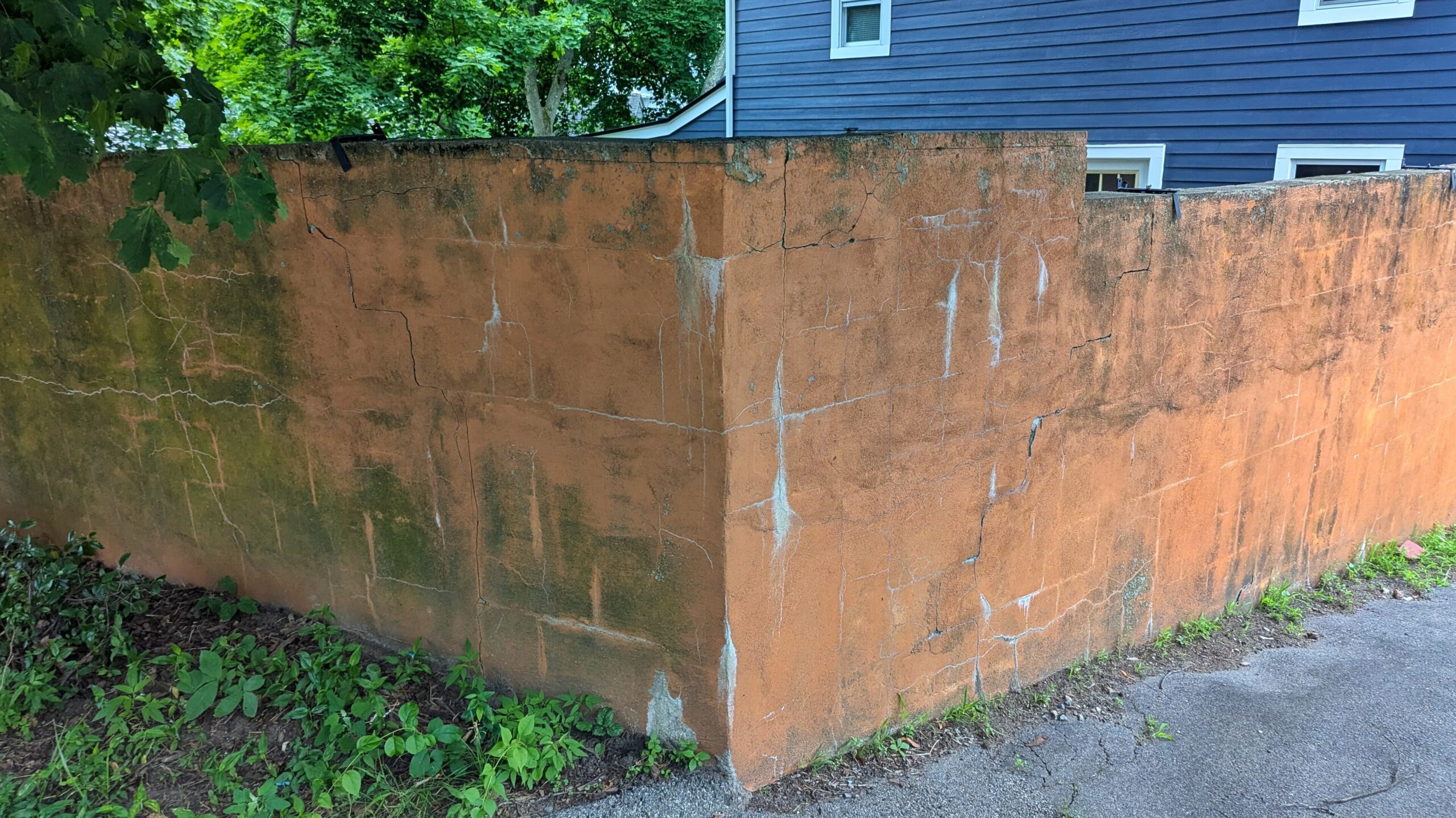
A Maine Family’s Only Way Home Is a Driveway They Share With the Neighbors. They Came Back From Vacation to a 6-Foot Concrete Wall Along It.
Emily Patrick and Aaron Crossman’s house on Lily Bay Road in Greenville, Maine, has no driveway of its own. To reach the small parking area behind their home, the family of seven uses a drive they share with the house next door. In 2023, the couple came back from vacation and found a 6-foot wall of concrete blocks running along part of it.
Three years later, the fight over that strip of gravel is still in Piscataquis County Superior Court, according to a Bangor Daily News report by Kathleen O’Brien published Oct. 13 in the Piscataquis Observer. Patrick told the paper the family is now leaning toward a confidential settlement, and if it goes through, they expect to sell the house and move.
A Driveway Shared Since 1982
Patrick and Crossman bought the home near Moosehead Lake in 2020. Their neighbors, Carl and Denise Chretien, had moved in two years before them and own the house next door as a second home, the BDN reported.
The arrangement between the two lots goes back decades. In 1982, earlier owners of the two properties created a deeded easement. It gives the owners of what is now the Patrick and Crossman home the right to use a 24-foot-wide strip running 125 feet from the center line of Lily Bay Road. With no driveway of its own, the house depends on that shared drive: it is the only way the family can get their cars home to the back of the house. Greenville’s 2026 property tax commitment book lists Aaron Crossman’s lot at 0.23 acres, next to a 0.77-acre lot listed to the Chretien family.
The couple has five children. Their youngest has a rare genetic kidney disorder and mild cerebral palsy. Patrick told the BDN the driveway has to stay clear so an ambulance can reach the house in an emergency, and that medical deliveries for her son arrive in larger vehicles.
Blocks, a Cattle Gate and Cameras
The wall the family found after their 2023 vacation lined part of the drive on the side the Chretiens control. Over time, the barriers along the driveway also came to include a cattle gate, planters, plastic poles, chains and posts, according to the report. Parts of the wall have since been moved or taken apart.
The family sued. A judge granted an injunction ordering the Chretiens to remove “all fencing including concrete fencing and barricade” that sat in or blocked the paved or gravel driveway by May 19, 2024. Patrick said the neighbors took some barriers away and pushed others back, but never hauled everything off.
Greenville’s code enforcement office, which handles land-use permits in town and takes fence permit applications, also weighed in. The town sent the Chretiens a notice that the barriers violate the town’s fence ordinance, telling them to remove the concrete blocks and the cattle fence and then apply for a fence permit. Patrick told the BDN the town has not enforced that notice. Town Manager Mike Roy did not respond to the paper’s request for comment.
Patrick also argues the barriers break Maine’s spite fence law. Under 17 M.R.S. §2801, a fence or similar structure that unnecessarily rises more than 6 feet and is maliciously kept up to annoy the neighbors is considered a private nuisance. She told the paper the security cameras pointed toward the drive invade the family’s privacy.
The Neighbors Tell a Different Story
The Chretiens declined to speak with the BDN. Their attorney, Chris Uphouse of Veridian Law, said the barriers went up to stop people from parking in the driveway and blocking the Chretiens’ own rear entrance and backyard. He said the cameras are there to document what the neighbors do.
Uphouse said the dispute started small. Crossman did drainage work along the driveway without permission, and later trimmed trees the Chretiens believed were theirs. Those trees turned out to be on Crossman’s land.
The Chretiens accuse Crossman of pulling out fence materials and dumping them in a retention pond, hitting the barriers with his vehicle, plowing snow against the fence and letting other people park in the drive. Patrick told the paper Crossman did lose his temper once and threw a gate into the pond, that the family has accidentally backed into the barriers, and that Crossman once broke a taillight. She said friends parked in the driveway only when the Chretiens were away, and that the barriers have damaged the family’s cars.
Earlier this year, the court found Crossman in contempt. The ruling, as quoted by the BDN, said he “violated the preliminary injunction by repeatedly, blatantly and systematically impeding Defendants’ use of the right-of-way.” At its core, Uphouse said, the fight is over whether the right-of-way covers the full surface and length of the driveway, as Patrick and Crossman believe.
‘Like a Prison’ and No Lawyer
Mediation has failed, according to Uphouse. Patrick said the family’s own lawyer has withdrawn, and they cannot afford to hire a new one.
She told the BDN the house feels “like a prison for so many different reasons,” and that the family keeps losing ground.
If the proposed settlement falls through, the case heads toward a jury trial in Superior Court, the only level of Maine’s courts where juries hear cases, which Uphouse said likely would not start until 2028. Until then, Patrick said, the family is “in purgatory at the moment, waiting to hear what is next.”
Shared drives and fences have set off other fights between neighbors, from a homeowner who gated his driveway to stop the neighbors parking there to a California neighbor who aimed three or four cameras at a new privacy fence.
This article was produced with AI assistance and edited for accuracy against the sources linked above.
Image: Daderot – CC0/Wikimedia Commons