Kamronbek Abdakimov, 10, Drowned in a Maineville Neighborhood Pond. Neighbors Asked for a Small Plaque on the Bench Beside It, and the HOA Said No.
Toys and flowers have been gathering at the edge of a small neighborhood pond off Hammerwood Court in Maineville, Ohio, since October. They mark the place where Kamronbek Abdakimov, a 10-year-old boy who was non-verbal with autism, drowned. Neighbors wanted something more lasting: a small plaque with his name on the bench that already sits beside the water. The homeowners association board said no.
The board’s decision was first reported on November 5 by Kennedi Cooper of FOX19 NOW in Cincinnati, which obtained the email explaining it.
A Plaque on a Bench That Was Already There
The request was a modest one. According to FOX19 NOW, neighbors asked the HOA board for permission to put a small plaque bearing Kamronbek’s name on an existing bench by the pond. Nothing new would have to be installed beyond the plaque itself.
Neighbors had already made the spot their own. After his death, people living around the pond began leaving toys and flowers beside the water, and FOX19 NOW reported that the makeshift memorial has kept growing.
Merrick Reynolds, a neighbor who spoke with the station, said the community had rallied around the family despite language and cultural barriers. “Super proud of a lot of neighbors that did a lot of extraordinary things for this family,” he said.
What the Board’s Email Said
The answer came from the community manager in an email obtained by FOX19 NOW. “After discussion, the board declined the request, citing the need to treat memorial requests consistently throughout the community,” the manager wrote.
“Residents have experienced other tragic losses, and the board expressed concern about establishing a precedent,” the email continued, “for individual memorials in shared spaces.”
The station did not identify the HOA by name or name its management company. FOX19 NOW said it reached out to the board for comment and was still waiting to hear back when the story ran.
Neighbors Who Expected a Simple Yes
Reynolds said the board’s answer surprised him. “It seems like that would be a pretty simple yes instead of a complicated no,” he told the station. He added that the loss “shook the neighborhood… shook the community,” and that he hoped there would be no repeat of it.
Another neighbor, who was not named, was blunter, calling the HOA’s response “despicable” and “pretty callous.” That neighbor told FOX19 NOW that having an 11-year-old daughter made it hard to imagine what Kamronbek’s family was going through.
No fundraiser or appeal was reported, and the plaque request remained denied as of the station’s report.
Who Decides What Goes on Shared HOA Land
In a planned community, the pond, the paths and the benches beside them usually belong to everyone and are managed by the association. Ohio’s planned community law, Ohio Revised Code Section 5312.06, says an owners association board may “adopt and enforce rules that regulate the maintenance, repair, replacement, modification, and appearance of common elements.” That is the kind of authority boards lean on when they say yes or no to anything added to shared ground, from signs to plaques.
The board’s concern about precedent fits inside that power. Whether it was the right call in this case is the question its neighbors are now asking out loud. This site has covered other fights over memorials on HOA ground, including a retired firefighter whose garden memorial was labeled “unauthorized signage” by a new HOA president.
Ponds Close to Home
Kamronbek’s death is a reminder of how close water can sit to the places children live and play. The Centers for Disease Control and Prevention estimates about 4,000 fatal unintentional drownings a year in the United States, about 11 a day, and says drowning is the second leading cause of unintentional injury death for children ages 5 to 14, after motor vehicle crashes.
The CDC’s drowning prevention guidance lists autism among the conditions that can raise a child’s drowning risk and advises extra precautions around water for children with autism. It also notes that drowning can happen within seconds and is often silent.
The American Academy of Pediatrics, on its HealthyChildren.org water safety page, suggests holding off on backyard ponds and fountains until children are older, says irrigation and drainage ditches near the home need to be secured, and recommends life jackets for children near lakes and rivers.
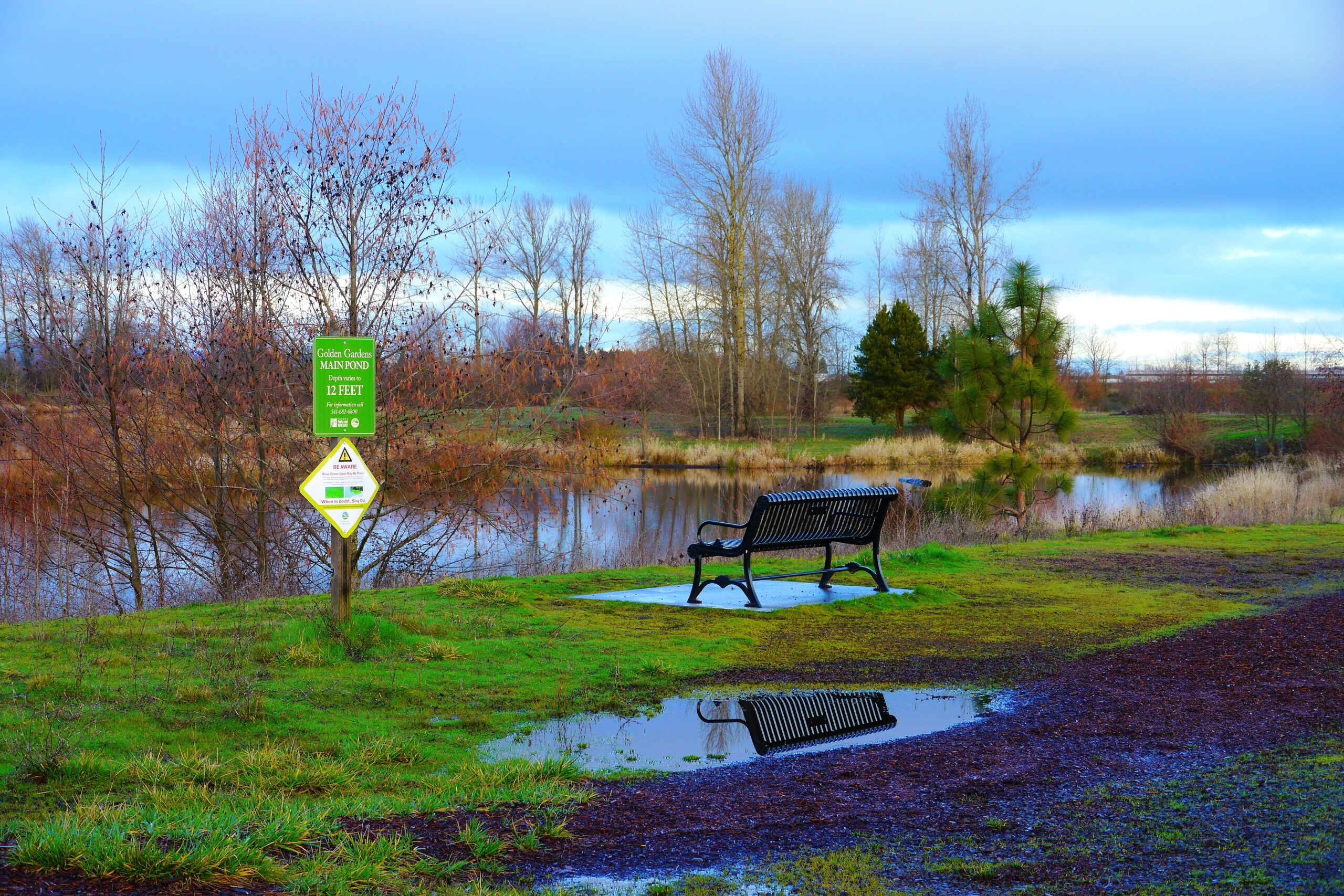
For now, the bench by the pond off Hammerwood Court stays as it was, without a name on it. The toys and flowers at the water’s edge are what neighbors have instead.
This article was produced with AI assistance and edited for accuracy against the sources linked above.
Image: Rick Obst – CC BY 4.0/Wikimedia Commons