Utah State Extension Professor Katie Wagner Says Mowed Fallen Leaves Can Go on Lawns in a Thin Layer, but Black Walnut and Diseased Leaves Belong in the Yard Waste Bin
With the leaves down, homeowners face the usual choice between raking, bagging and leaving them where they fell. Katie Wagner, an Extension Professor of Horticulture with Utah State University Extension in Salt Lake County, answers it in a Nov. 8 commentary, and her answer is mostly to leave them, with a few exceptions.
Wagner, who has 17 years of experience as a gardening educator, says mowed leaves can go back on the lawn in a thin layer. Black walnut leaves and diseased leaves are the ones that belong in the yard waste bin instead.
Why a thin layer of chopped leaves helps the lawn
Leaves are not a fertilizer, Wagner writes. Their nitrogen, phosphorus and potassium levels are relatively low. What they do offer is organic matter, which improves soil structure and feeds microbes and larger soil organisms as the pieces break down. They are also free.
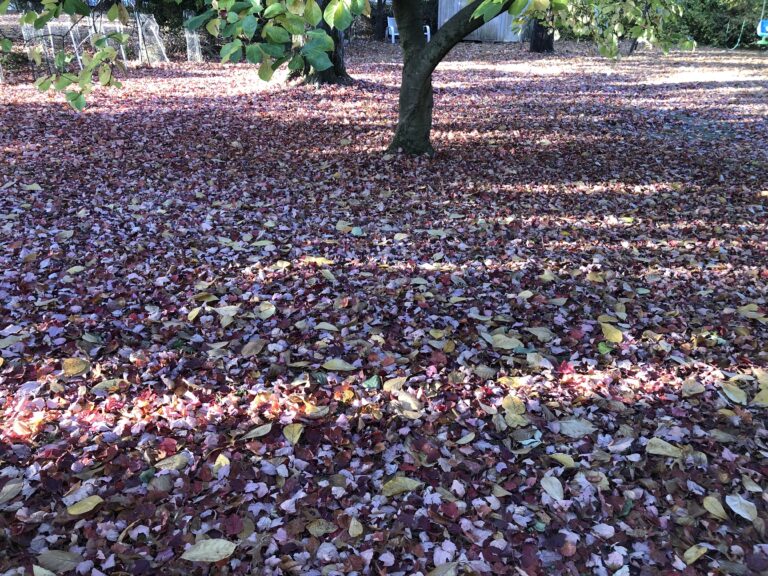
Her advice is to mow them. Chopping speeds up decomposition, and on a lawn a thin layer can be mulched in place instead of raked. The small pieces settle down toward the soil, block some light and can reduce weed seed germination.
Other extension services describe the same approach. Colorado State Extension’s GardenNotes suggests setting the mower deck at its highest setting, removing the bagger and making at least two passes. The layer is fine, the guide says, if some grass is still visible through the leaves.
How many leaves are too many
The limit matters, because a thick blanket can do harm. Wagner warns that heavy layers can block sunlight from grass blades and other plant parts that photosynthesize. Piling on too many leaves at once can also upset the carbon-to-nitrogen balance, which affects how easily plants reach soil nutrients, and thick layers turn slimy.
Ken Johnson, a horticulture educator with University of Illinois Extension, puts a rough number on it. In an Oct. 16 post he writes that leaves are unlikely to smother turf if they cover only 10 to 20 percent of the lawn, and that thicker layers can kill grass. He recommends mowing when the leaves are dry and chopping until grass is visible beneath.
At the University of Nebraska-Lincoln, extension educator Elizabeth Exstrom says mulching works for layers up to 6 inches at a time, depending on the mower. She suggests a mulching mower or two to three passes with a regular one, and alternating between bagging and mulching when leaves pile up heavily.
Virginia Cooperative Extension turfgrass specialist Mike Goatley adds practical cautions in an Oct. 2025 Virginia Tech article. Thick layers trap moisture and can raise the risk of turf disease. He says to remove sticks first, wear safety goggles and an air mask, and mulch when leaves are moist but not soaked, since wet leaves strain the engine and do not break down well.
The leaves that go in the yard waste bin
Wagner is specific about what not to keep. Diseased leaves and leaves from black walnut trees belong in the yard waste bin. She also says not to mulch or compost the reproductive parts of problem plants, such as field bindweed rhizomes, puncturevine seeds or grape hyacinth bulbs.
Anything left over beyond the thin layer on the lawn can be handled in small amounts. Wagner recommends adding a modest quantity of mulched leaves each year and discarding the rest.
Where the rest of the leaves can go
Not every leaf has to end up on the grass. Johnson says a layer of leaves can be worked into garden beds in fall to add organic matter, improving drainage in clay soil and water and nutrient retention in sand. Because leaves are high in carbon and low in nitrogen, he notes that a small amount of fertilizer helps them break down.
Shredded leaves also make a mulch. According to Johnson, they conserve moisture, moderate soil temperature, prevent crusting and erosion, control weeds and add nutrients as they decompose. Colorado State’s guide suggests six to eight inches of shredded or mower-chopped leaves a year on garden beds.
For plants at the edge of their hardiness, both services describe leaves as insulation. Johnson suggests placing shredded leaves around the crowns of marginally hardy plants such as some hybrid tea roses, lavender and figs, after temperatures stay consistently below freezing. Colorado State recommends three to six inches inside a wire cage for tender or new plants.
Whatever is left can go into a compost pile. Leaves are a valuable “brown” material, both services note, and Colorado State advises combining them with nitrogen-rich “green” materials.
Slippery paths and leaf litter
Wet, decomposing leaves are slippery, Wagner notes, and can be hazardous in high-traffic areas such as driveways and patios. For leaves that are not going on the lawn, she suggests placing mulched leaves in restricted-access spots such as vegetable gardens or compost bins until spring. She also recommends gloves and long sleeves when picking up leaves, since spiders may be hiding in them.
Leaving some leaf litter has tradeoffs, she acknowledges: the entry may need vacuuming more often and the yard may look less tidy. But, she writes, “Mother Nature doesn’t rake the forest floor every fall.” Illinois Extension adds that leaf litter provides winter habitat for insects, native bees, salamanders and toads.
Gardeners who want more on how deep leaves can sit in a yard can read this site’s earlier look at how deep to leave fall leaves, or the note on the year’s last mowing.
This article was produced with AI assistance and edited for accuracy against the sources linked above.
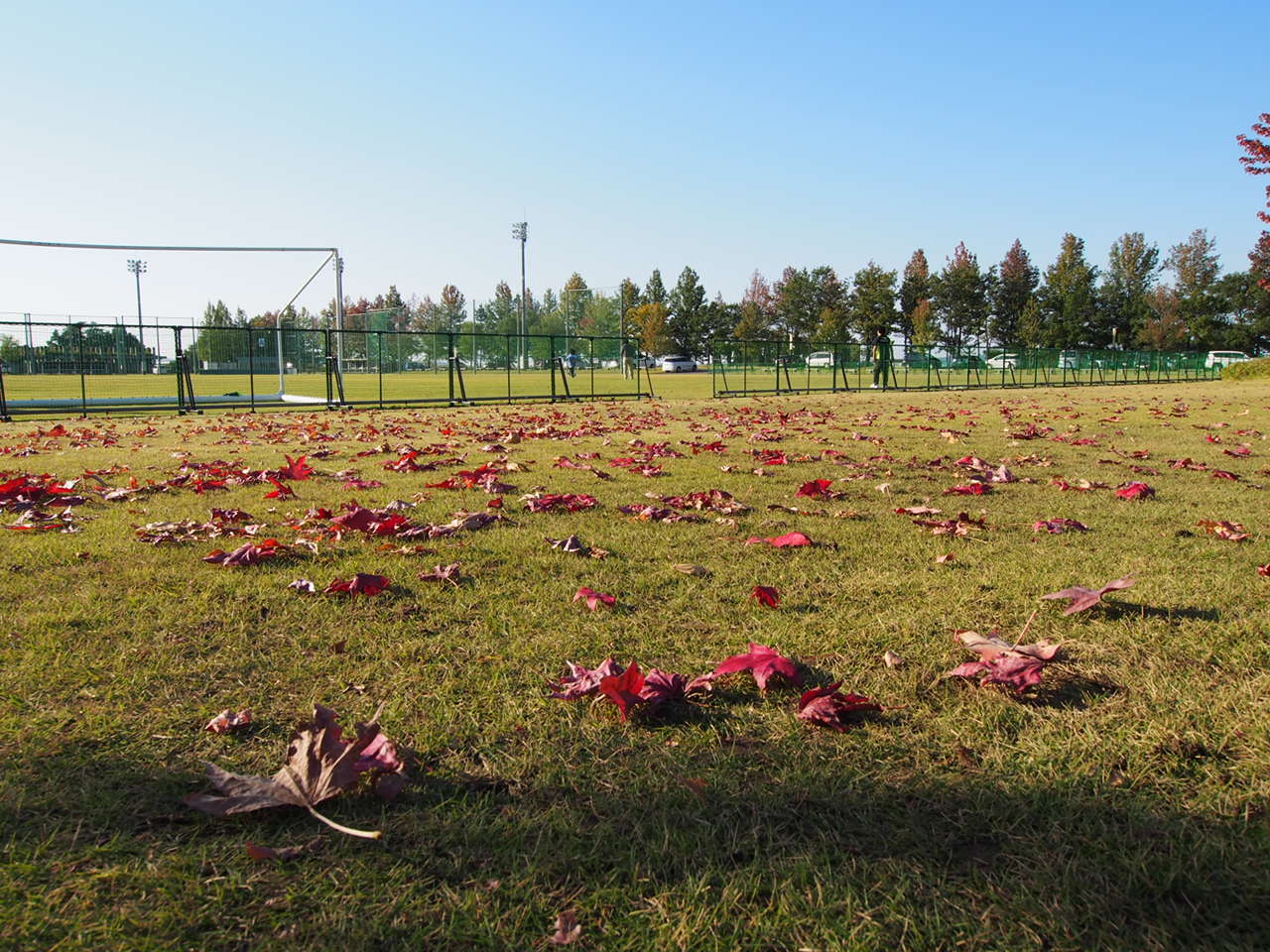
Image: “Autumn Leaves on Lawn, Toyama Athletic Recreation Park – Oct 19, 2014” by Toukou Sousui is licensed under CC BY 2.0.