A Neighbor Wants $2,000 Before She’ll Let the Family Next Door Tie Into Her 2½-Year-Old Fence, and Survey Caps Suggest One Corner Sits on Their Land
A homeowner trying to finish fencing in a backyard has run into a bill nobody mentioned when the first boards went up. The neighbor next door built a wooden fence about two and a half years ago, and now she wants roughly $2,000 before she will let the family tie their new sections into it.
The story, reported by FAIL Blog, took another turn after the homeowner went looking for the old survey markers. A straight line between the caps suggests one corner of the neighbor’s fence sits slightly on the homeowner’s side.
A Fence Built Without a Conversation
According to the homeowner, the neighbor put up her fence roughly five inches inside her own property line, and it stops short of the back of the lots. She picked the contractor, the materials, where it went and the stain.
At the time, she offered a group discount if the family built their side at the same time. They could not afford it then. No one talked about splitting costs, and the family says nothing was agreed.
Now the family is building an extension to fully enclose the backyard. Their new sections would sit on their own land, but they want to connect them to the neighbor’s fence where the two meet.
The HOA Rule Behind the $2,000 Request
The homeowners association requires the neighbor’s written permission for that connection. That rule is what gives the $2,000 request its weight. The neighbor says the figure is about half of what she originally paid for that section of fence and the staining.
The homeowner disagrees with the math. The fence is two and a half years old, some boards have already warped, and the stain has weathered. None of that, the homeowner says, is reflected in the number.
Building a second fence right beside the first one is not a good answer either. The family’s side yard is only about seven feet wide, and a parallel fence would make it hard for anyone to reach the neighbor’s warped boards to fix them. Instead, the homeowner has floated leaving gaps of about eight inches where the new fence would meet hers, while still mowing the narrow strip along her fence and letting her in with notice for repairs.
Who Pays for a Fence Between Two Yards
Where a fence sits matters. Owners who share a fence on the line are generally treated as equally responsible for its upkeep, and agreements about cost sharing belong in writing, according to Angi’s guide to shared fences. Fence builder Ergeon advises legally establishing the property line before building or replacing a fence, even when one is already there.
Some states spell out the process. California’s Good Neighbor Fence Act presumes neighbors split the reasonable cost of a boundary fence but requires 30 days’ written notice before the work, with an estimate and the proposed split, according to an explainer from Schorr Law. The homeowner in this story did not say which state the houses are in, and no notice was ever given before the fence went up.
What the Survey Caps Showed
The update that changed the conversation came from the ground itself. The homeowner found survey caps set when the houses were built and drew a straight line between them. By that line, a corner of the neighbor’s fence appears to sit slightly on the homeowner’s property.
It is not a confirmed survey result. Massachusetts land surveyor Shaine Bonin told Boston.com that a survey should come before any fence goes in near a boundary, and warned that a misplaced fence can create a “line of occupation” that may later feed an adverse possession claim. The case of the neighbor who spent $30,000 on surveys showed how quickly a couple of feet can flip a fight.
The homeowner also said the same neighbor declined to split costs on a shared fence with another neighbor, then connected to that neighbor’s fence without asking or paying. The other neighbor disputes her claim that it was mutually agreed.
What Readers Suggested
FAIL Blog’s writer said paying half seemed like too much, since the family had no say in the design or the build, and recommended a professional survey before deciding anything. Commenters suggested leaving the gap and planting a shrub or an arborvitae in it, building a fence entirely on the family’s own side, or using an H-style post instead of tying into her boards.
As of the report, nothing had been resolved, and the family was still weighing whether the $2,000 request was fair at all.
This article was produced with AI assistance and edited for accuracy against the sources linked above.
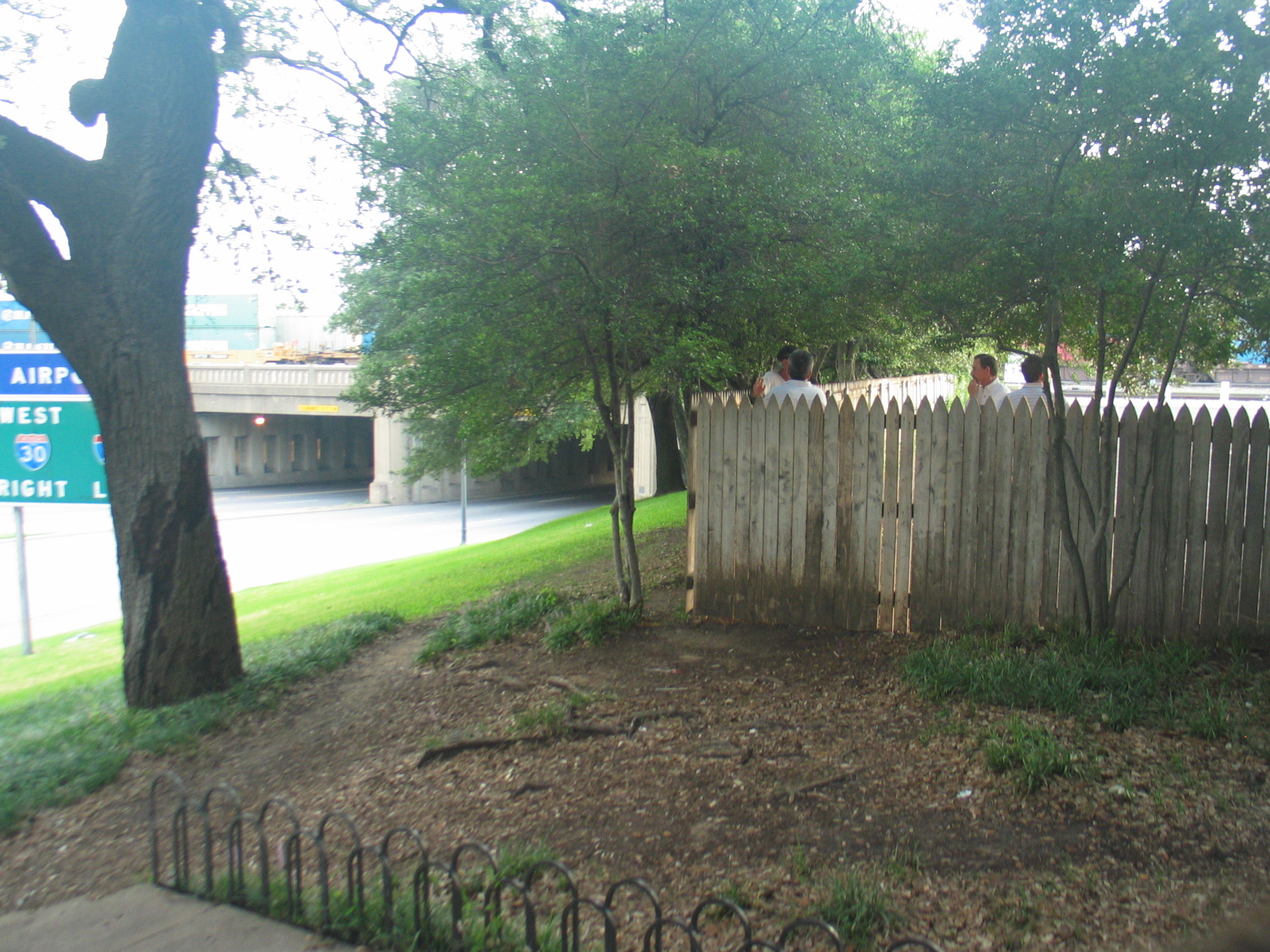
Image: “JFK Wooden Fence” by BenFrantzDale is licensed under CC BY-SA 3.0. To view a copy of this license, visit https://creativecommons.org/licenses/by-sa/3.0/.