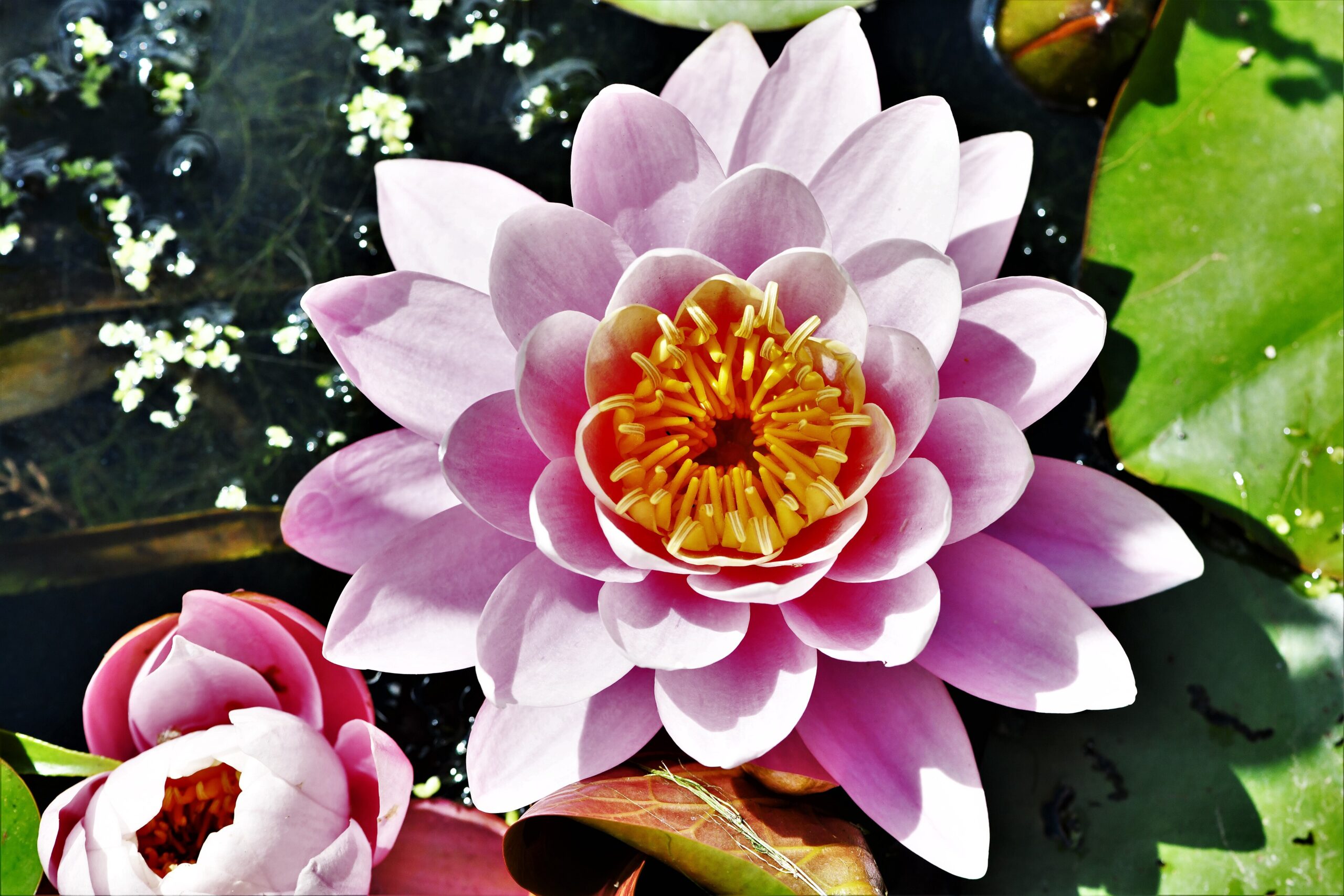
Hardy Water Lilies Spend Winter on the Pond Bottom in at Least 20 Inches of Water, Virginia Cooperative Extension Says, While Tropical Lilies Need Water Above 50 Degrees
Hardy water lilies do not need to come out of a backyard pond for winter. A Virginia Cooperative Extension guide to winterizing the water garden says they can be placed on the pond bottom in a water depth of 20 inches or more and moved back to shallow water in spring. Tropical water lilies are a different matter: the same guide says they are hardy only in USDA zones 10 and 11 and must spend winter in a pond or tub where the water stays above 50 degrees.
The publication, written by Lynnette Swanson, Laurie Fox, Mike Andruczyk, Susan French and Traci Gilland and reviewed by Virginia Tech’s David Close, also covers the fish, the falling leaves and the ice. Several other extension programs fill in the same jobs with their own numbers, and most of the work lines up with November.
Sinking the Hardy Lilies
Hardy lilies survive winter because the water above them keeps the rhizomes from freezing. Colorado State University Extension says to lower them to the deepest part of the pool in October or November. For a pond too shallow to protect them, it offers an alternative: move the plants to a root cellar or garage where winter temperatures drop to near 40 degrees. Either way, the warning is the same: “don’t let the rhizomes freeze or dry out.” Growth resumes in April.
The Illinois-Indiana Sea Grant program sets a slightly deeper target, recommending that winter-hardy plants sit under at least two feet of water if the pond is deep enough. Kansas State University horticulturist Emily Nolting, in the K-State Research and Extension water garden maintenance guide, says hardy submerged plants should be trimmed to below ice level.
Bringing Tropical Lilies Inside
Tropical lilies need more work. Colorado State says that in October, before the first frost, they come out of their large containers, lose most of their leaves and roots, and get repotted in a one-gallon pot. The plant then moves indoors to an aquarium or similar container with plenty of light and a temperature above 68 degrees.
Some tropicals make storage easier. Colorado State notes that certain varieties form acorn-sized tubers at the base of the crown in late summer or fall, and those tubers can be stored in water at 55 to 60 degrees over winter. In spring, they go into 70- to 75-degree water in a greenhouse, starting in three-inch pots before moving up to five-inch pots.
Illinois-Indiana Sea Grant offers the simpler route for any plant that is not winter-hardy in the local zone: move it into a heated pond or tub kept above 50 degrees. Oxygenating plants such as hornwort, American waterweed and sago pondweed, along with floating plants, can go into indoor aquariums.
Fish, Leaves and Ice
Feeding changes as the water cools. Nolting’s K-State guide says to stop feeding fish once the water is below 50 degrees and to start again in spring when it climbs back above 50. An older Iowa State University Extension article by Sherry Rindels sets the cutoff a little lower, at 45 degrees, and adds that fertilizing pond plants should stop once daytime water temperature drops below 60.
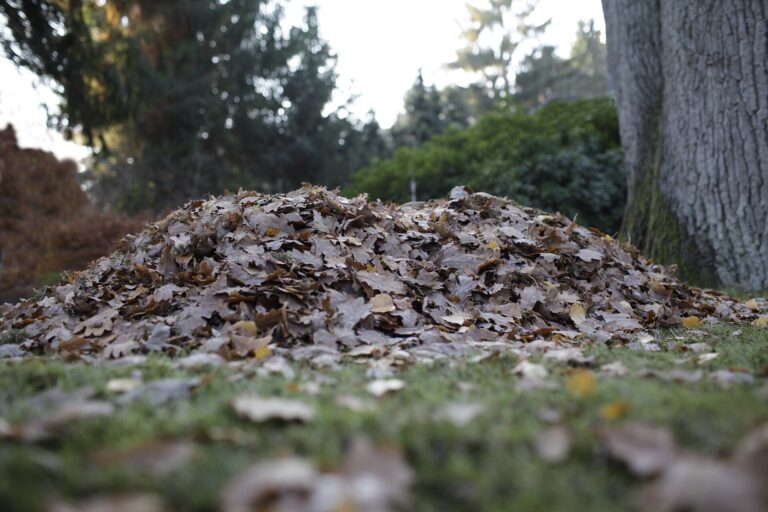
Leaves are the other November problem. The Virginia guide recommends placing netting over the pond each autumn to catch falling leaves, and Illinois-Indiana Sea Grant says to remove decaying plants and debris and thin dense vegetation. Rindels’ Iowa State article suggests a full cleaning once silt, leaves or debris reach an inch or more.
Ice is acceptable, but a solid lid is not. The Virginia publication says some ice is fine, but thick ice should not seal off the pond, because fish and plants need unfrozen areas for oxygen. It lists floating de-icers, pond heaters, bubble balls, air bubblers and running the pump continuously among the ways to keep part of the surface open, and it says the water level should not be allowed to drop much over winter. The Iowa State article gives a size: an opening about one foot across for every 100 square feet of pond surface. K-State adds a firm rule about method, saying the ice should never be struck to break it.
K-State’s winter checklist also includes turning off waterfalls, streams and fountains, cleaning biofilters, and winterizing pumps as needed.
Getting Rid of Plants Without Spreading Them
Fall cleanup produces a pile of trimmed pond plants, and Illinois-Indiana Sea Grant cautions against simply dumping them. Many can go into the compost, but the program says, “Invasive plants should be bagged in plastic and placed in the trash because if seeds, roots or other parts are not fully decomposed, then they can spread to new areas.” It also advises against composting plants from a pond that has snails, and warns that releasing aquatic plants into natural areas can spread invasive species.
Donating or trading extra plants is another option, though Sea Grant notes that some species are prohibited in certain states.
A November Order of Work
Taken together, the extension guidance suggests a simple sequence for this month. Net the pond and skim leaves while they are still falling. Trim hardy lilies and set them on the bottom, at least 20 inches down by the Virginia figure or two feet by the Sea Grant figure. Move tropical lilies and tender plants indoors to water above 50 degrees, or above 68 degrees for growing tropical lilies under Colorado State’s method. Stop feeding fish as the water drops into the 40s, and set up a de-icer or bubbler before the first hard freeze so the surface never seals over completely.
Other end-of-season chores follow the same logic of draining, storing and protecting. Garden hoses and equipment get similar treatment in the steps for putting away the mower, hoses and tools, and empty flowerpots last longer when cleaned and stored under cover. Leaves skimmed from the pond do not have to go to waste either, since Clemson Extension makes the case for leaving fallen leaves in garden beds for overwintering insects.
This article was produced with AI assistance and edited for accuracy against the sources linked above.
Image: Michael Garlick – CC BY-SA 2.0/Wikimedia Commons