Four Different Fiber Companies Have Dug Up Mark Watkins’ Yard in Indian Trail, and the Town Has Had One Staffer Handling Complaints Full Time for Two Months
Mark Watkins’ yard in Indian Trail, North Carolina, has become a repeat construction site. Four different fiber internet companies have dug up his yard in the Hemby Commons neighborhood on separate occasions, WSOC-TV reported on Nov. 3, as competing providers race to wire the fast-growing Union County town.
“Is there a limit?” Watkins asked the station, warning that without one the “destructive pattern” would simply continue. The complaints have grown so steady that, according to Indian Trail’s town manager, one town staff member has spent about two months handling them full time.
Five Companies, Eight Neighborhoods
Indian Trail Town Manager Adam McLamb told the station that five fiber companies and their subcontractors are working in eight of the town’s neighborhoods. The providers named in the report were Frontier Fiber, working with Verizon; Gigapower, working with AT&T; GFiber, from Google; Kinetic Fiber, from Windstream; and Ripple Fiber, now part of Eaton Fiber.
McLamb said the town is not trying to block the buildout or stop growth. What it wants, he said, is “a little bit more accountability and a little bit more conversation with some of the providers.”
The town’s advice to residents is to contact the fiber company first. If that does not work, the town can step in to mediate, and in some ongoing problem cases it can issue a temporary stop-work order that pauses a job. Indian Trail now also requires companies to post signs and notify neighbors before working along town-owned roads.
Water Lines, Boil Notices and a House Fire
McLamb said Bent Creek has probably been hit the hardest of any neighborhood he knows of. Three fiber companies have worked in that neighborhood, and one homeowner there told WSOC that crews hit her water line twice in a few months. She has been under at least five boil water advisories because of damaged lines.
In neighboring Stallings, the stakes have been higher. The Union County Fire Marshal’s Office said a fiber company struck a power line last month, sending electricity into a cable line and starting a house fire. Stallings leaders have drafted a letter asking for state and federal review of how providers are held accountable, how residents are protected and how much control towns have over their own rights-of-way.
Stallings Town Manager Alex Sewell said the town supports expanding broadband access, but residents have repeatedly raised utility strikes and property damage.
What the Companies Said
Kinetic Fiber said it follows notice requirements, apologized for the inconvenience and said that “every project strictly adheres to North Carolina 811 locate laws.” The company said line cuts “typically stem from unmapped or mislocated legacy lines,” along with nonstandard utility depths and tight rights-of-way.
GFiber said it takes construction concerns “very seriously,” locates existing utilities before digging and is working with Indian Trail. Ripple Fiber said it finished its Union County build in July 2026 and that its crews now seen in the area are repairing its own lines after other providers’ work struck them. Ripple directed residents to its support page.
The Rules Crews Are Supposed to Follow
North Carolina’s Underground Utility Safety and Damage Prevention Act requires anyone excavating to notify the state’s notification center at least three working days before digging. Utility operators then have to mark their lines with paint, flags or stakes using a standard color code, and excavators must confirm every operator has responded before they start.
The law sets a tolerance zone around each marked line, generally 24 inches from the edge of the mark when the line’s size is not shown, where mechanized digging is restricted until the line has been visually found. The state’s Damage Prevention Review Board can order training or impose civil penalties of up to $2,500 for violations, and the law does not limit a homeowner’s other legal remedies for property damage.
There is a catch for homeowners. NC811, which has linked excavators with utilities since 1978, notes that the 811 process marks publicly managed lines, but private lines on private property are not marked. That can include the lines homeowners put in themselves, which is one reason a yard can be torn up even when crews follow the rules.
A National Pattern Behind the Digging
Indian Trail is not alone. The Common Ground Alliance, the national group that tracks damage to buried utilities, recorded more than 83,000 reports of damage to gas and electrical lines in 2024, and about one in four came from people who did not call 811 before digging, WCJB reported in October. The alliance’s Sarah Magruder Lyle told the station that large internet upgrades are driving much of today’s digging, and that “the incident rate is increasing with the amount of construction.”
“All roads lead back to mapping,” she said, pointing to the same problem Kinetic described in Union County: lines that are missing from the maps or are not where the maps say.
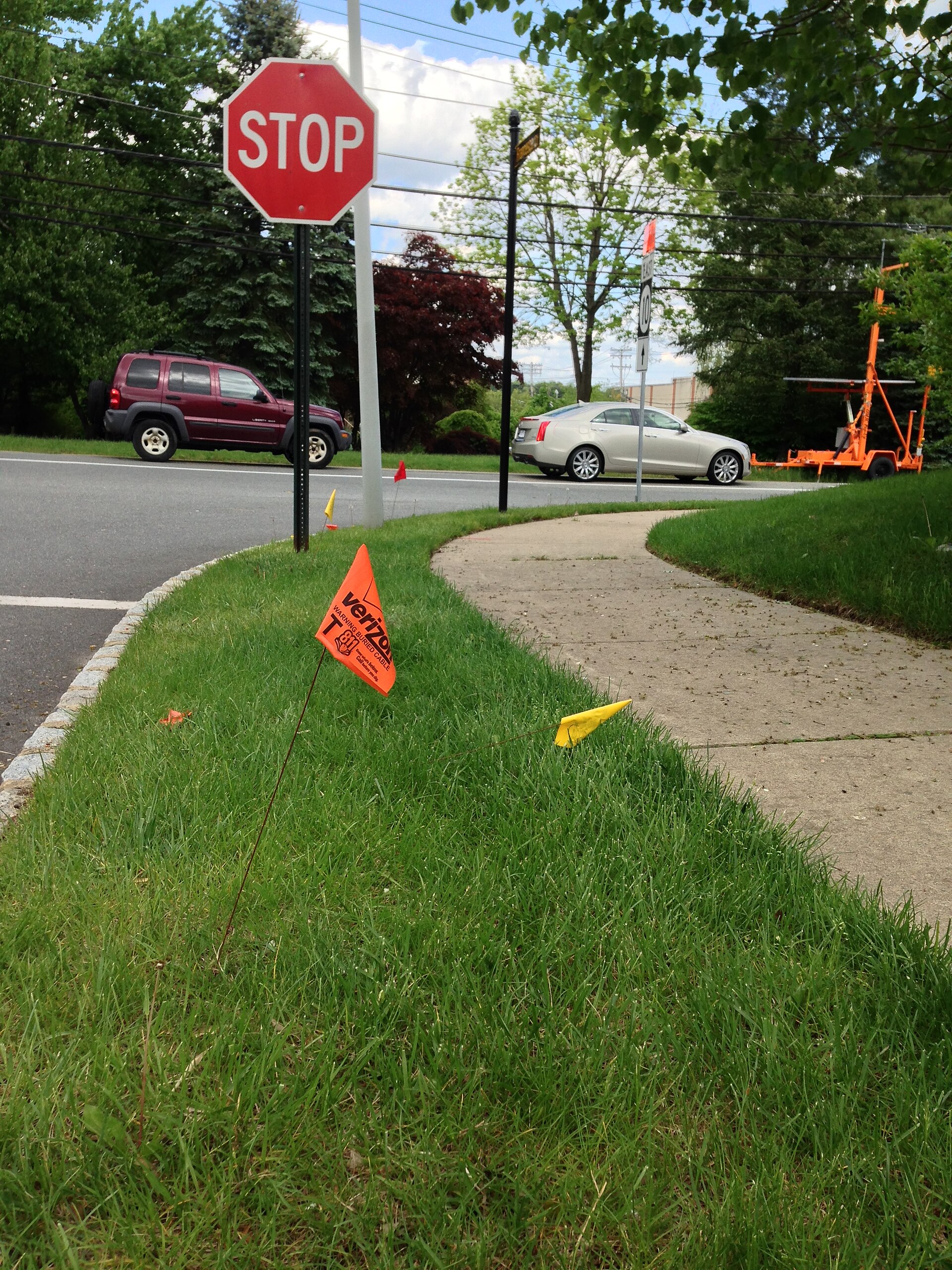
The marking colors crews leave in a yard follow a standard code. Red is electric, orange is phone, yellow is gas, blue is water and green is sewer and storm drains, according to the locating company UtiliQuest. A notice to dig in North Carolina also expires 28 calendar days after the work start date under the state act, so longer jobs require a fresh notice.
Who to Call When the Crews Return
Indian Trail has a web page on third-party fiber installation, and Stallings launched a fiber construction page listing provider contacts and a way to report problems. GFiber told WSOC that residents can reach its construction line at (877) 454-6959 at any hour, and Ripple listed 800-359-5767. If a company does not respond, Indian Trail residents can turn to the town, which can mediate and, in ongoing cases, pause the work.
A Familiar Problem for Gardeners
Fiber work has led to disputes in other yards, too, from a fiber line buried under a homeowner’s maple tree to a utility crew that dug through a garden without notice.
Indian Trail says it plans to take up the issue when it sets its legislative priorities by the end of the year. For Watkins, the question is simpler: how many more times his yard will be opened before the work is done.
This article was produced with AI assistance and edited for accuracy against the sources linked above.
Image: z22 – CC BY-SA 3.0/Wikimedia Commons