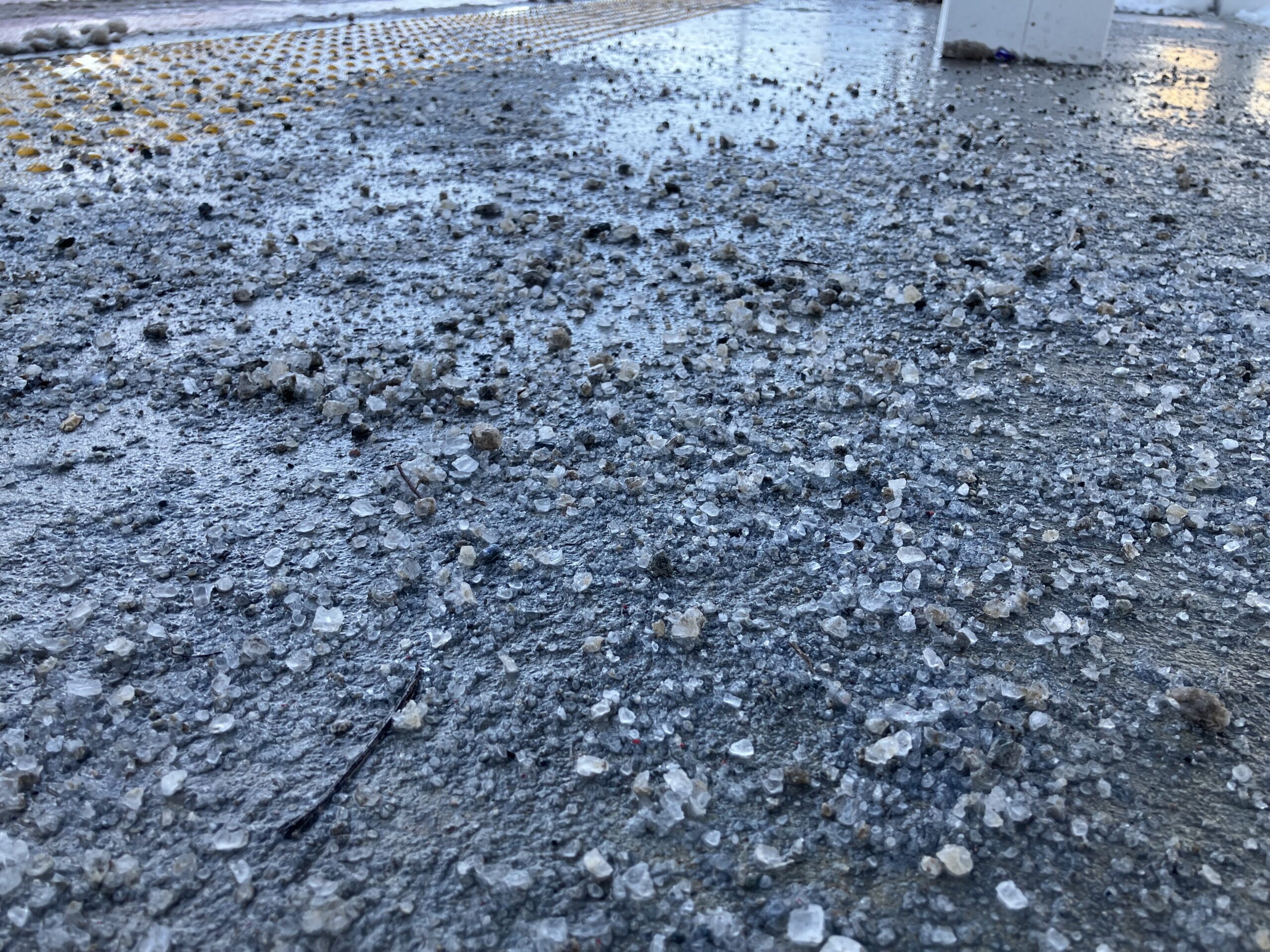
Twelve Ounces of Rock Salt Is Enough for a 20-Foot Driveway, Illinois Extension’s Ken Johnson Says, and Shrubs Within 30 Feet Pay for the Extra
Before the first snow of the season, it helps to know how little salt a driveway actually needs. Ken Johnson, a horticulture educator with University of Illinois Extension, says homeowners are likely using too much: about twelve ounces of salt covers a 20-foot driveway or about 10 squares of sidewalk.
That figure comes from Johnson’s guide to deicing salt and landscape plants, which cites the Salt Smart initiative. Spread more than that, and the excess washes or sprays into the soil where shrubs, perennials and grass have to live with it until spring.
How far the damage reaches
Bruce Spangenberg, a horticulture outreach specialist with the University of Wisconsin-Madison Division of Extension, puts a number on the danger zone. In his advice on reducing deicing salt damage, he writes that plant injury typically shows up within 30 feet of salted roads, driveways and parking lots.
For many homes, that takes in the front lawn, the hedge along the sidewalk and the beds beside the driveway. Salt reaches plants two ways, as airborne spray and as salty meltwater soaking into the soil, and extension experts treat the two as separate kinds of injury.
Johnson lists what that salt does underground. It breaks down soil structure, compacts the soil, slows the movement of water and air and raises the pH. Chloride builds up in the growing tips of plants, causing stunted yellow leaves, scorched edges and twig dieback. Plants can look drought-stressed even when the soil is wet.
Spreading less, and spreading smarter
Johnson’s first rule is spacing. He advises leaving “about 3 inches of space between the salt grains.” He recommends keeping salt to the spots that truly need it, such as steps, sloped walks and inclined driveways, and clearing snow before any salt goes down.
The City of Madison, Wisconsin, makes the same point in its SaltWise winter kit guidance: a standard 12-ounce coffee mug of salt is enough for a 20-foot driveway or 10 sidewalk squares. The city also notes that when pavement temperatures drop below 15 degrees, salt will not work, and sand for traction is the better choice.
Leftover salt should be swept up once the ice melts, Johnson says, rather than left to wash into the beds. He suggests mixing salt with sand, ash or kitty litter to stretch it.
Johnson calls calcium chloride, magnesium chloride and calcium magnesium acetate gentler deicers, though he notes they can still cause some damage. Spangenberg lists the same three as alternatives and points out that they cost more.
Shielding the plants already there
For shrubs that sit right along a street, a physical screen helps. Spangenberg recommends temporary burlap screening along roads where salt spray is likely, and Johnson suggests plastic or burlap barriers as well.
Where snow gets piled matters too. Spangenberg advises thinking about where snowmelt will drain before choosing a spot to heap shoveled snow, so the salty runoff does not flow straight into a bed.
When spring comes, Johnson says heavily salted soil should be watered deeply to leach the salt down and out of the root zone, and plants hit by salt spray can be hosed off. He also warns against heavy salting after March 1, when plants are breaking dormancy and are more easily hurt.
Spangenberg adds that gypsum can help on lawns, but only where the soil drains well. In poorly drained areas near roads, it does little.
Plants that hold up, and plants that fail
For new plantings within salt’s reach, Johnson lists sweet gum, bald cypress, Kentucky coffeetree, common horsechestnut, red oak, juniper, eastern red cedar, sumacs, potentilla and rugosa roses as tolerant of both salty soil and salt spray. He cautions that even tolerant plants can be damaged at high salt levels.
A UMass Extension fact sheet by Mandy Bayer and Geoffrey Njue goes the other direction, naming species that are sensitive to salt. Its list includes red maple, sugar maple, serviceberry, common boxwood, red twig dogwood, Norway spruce, Eastern white pine, pin oak, littleleaf linden, Eastern hemlock and viburnum.
The fact sheet cautions that tolerance varies within a species and depends on whether a plant gets spray or salty soil. Johnson writes that evergreens hit by salt turn pale green, yellow or brown in late winter and early spring, while deciduous plants may lose buds or bloom poorly.
Why it matters beyond the yard
Johnson cites the University of Minnesota’s finding that one teaspoon of salt can pollute five gallons of water. The University of Wisconsin’s Nelson Institute salt tips put it the same way, adding that the level is toxic to freshwater life.
Gardeners already getting beds ready for winter can add salt to the list of things to plan before the first storm. Other cold-weather chores on this site include Iowa State’s Aaron Steil on when frost covers stop working and why boxwoods brown in winter and when the burlap goes up.
This article was produced with AI assistance and edited for accuracy against the sources linked above.
Image: Gogerr – CC BY-SA 4.0/Wikimedia Commons