After Seven Years of HOA Letters Over Their Fence and Landscaping, the HOA President Told a Couple to Move if They Didn’t Like It. So They Are Selling.
Seven years of homeowners association letters about a fence and landscaping ended with one sentence from the HOA president: if the couple did not like how things were run, they should move. They took her at her word. Bored Panda reported on Oct. 8 that the couple has decided to sell the house they had hoped would be their forever home.
The couple is not named, and Bored Panda drew the account from their own post, so the details below are their version. The outlet did not report a response from the HOA or its president, and it reported no later developments.
Warnings, a $1,500 Fine and a Second $1,500 Bill
According to Bored Panda, the dispute never settled into one big fight. It was a long run of warnings, threats, fines and arguments. The couple received repeated warnings about their fence and their landscaping over the seven years.
At one point the HOA fined them $1,500. That fine was later rescinded. Separately, the couple was hit with a $1,500 special assessment for neighborhood repairs. The article describes the total charges over the years as “thousands of dollars.”
The two charges are different things. A fine is a penalty aimed at one household over a rule. A special assessment is a charge spread across owners for a shared cost, which fits the neighborhood repairs bill the couple described. Only the fine was taken back.
Letters That Made Opening the Mailbox Hard
Bored Panda says the couple found the HOA letters so stressful that getting one could set off a panic attack. They had hoped to stay in the home long term, and the outlet notes they love the house itself.
The turning point was the president’s response. When the couple did not agree with how the association was run, she told them to move if they did not like it. They decided to do exactly that, even though, according to the article, moving will cost them more than staying.
That detail is the heart of the story. The couple is giving up a house they like rather than keep absorbing the warnings. Bored Panda’s own wording is that one couple “takes her seriously,” and the article ends with a reader poll on how people feel about the president’s remark.
How a Special Assessment Works
A special assessment is often the least understood charge in an HOA. Rocket Mortgage’s guide describes it as an additional, mandatory fee charged to owners on top of regular dues. Boards use it when a need arises that regular dues and reserves cannot cover, such as unbudgeted repairs, storm damage to private roads, or underfunded reserves. Regular dues, the guide says, are recurring and predictable, while special assessments are temporary and aimed at a specific cost.
Nolo’s legal encyclopedia says the limits come from the association’s governing documents and state law. Documents such as the CC&Rs and bylaws set the notice and voting procedures. Some states cap how much an HOA can collect in special assessments in a calendar year, or require a vote of all owners above a certain amount. Nolo adds that major repairs are typically paid from a reserve fund, and that without one the association generally has to assess owners directly.
The Bored Panda article does not say what the $1,500 assessment paid for beyond “neighborhood repairs,” or whether the couple challenged it. It also does not say where the couple lives, so the rules that applied to them are unknown.
What Surveys Say About Life Under an HOA
The couple’s experience is one side of a divided picture. The Foundation for Community Association Research, the research arm of the Community Associations Institute, reports in its 2026 Homeowner Satisfaction Survey that 86% of residents rate their community association experience as positive or neutral, and 82% say their board serves the community’s best interests. The survey covered 3,000 residents nationwide between Feb. 26 and March 14, 2026, with a margin of error of 1.8 percentage points.
A Rocket Mortgage survey of 1,001 Americans who live in an HOA found a sharper split. It reported that 57% dislike having an HOA, more than three in 10 feel the association has too much power, and about one in 10 are considering selling because of HOA-related reasons. The margin of error is 3 percentage points. Rocket’s page carries a March 2024 update date and does not give the fieldwork dates.
The two surveys use different questions and samples, so the numbers do not cancel each other out. They do show that a couple deciding to sell over HOA friction is part of a real, if minority, pattern. Other homeowners have fought similar battles over yards and fences, including one woman whose HOA approved a privacy fence before a neighbor complained, and another whose neighbor planted a tall hedge while the HOA refused to enforce its own landscaping rules.
This article was produced with AI assistance and edited for accuracy against the sources linked above.
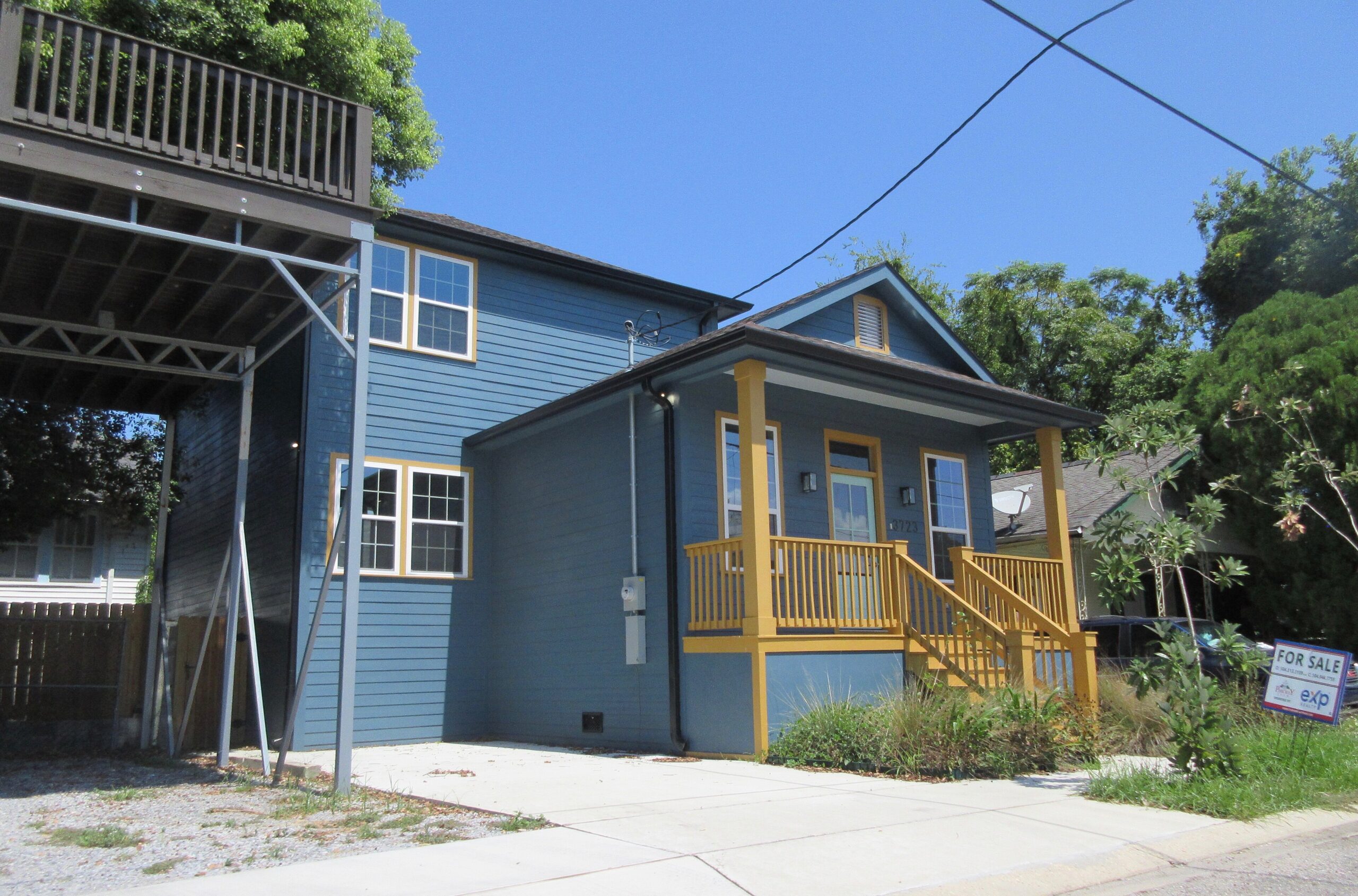
Image: Infrogmation of New Orleans – CC BY-SA 4.0/Wikimedia Commons