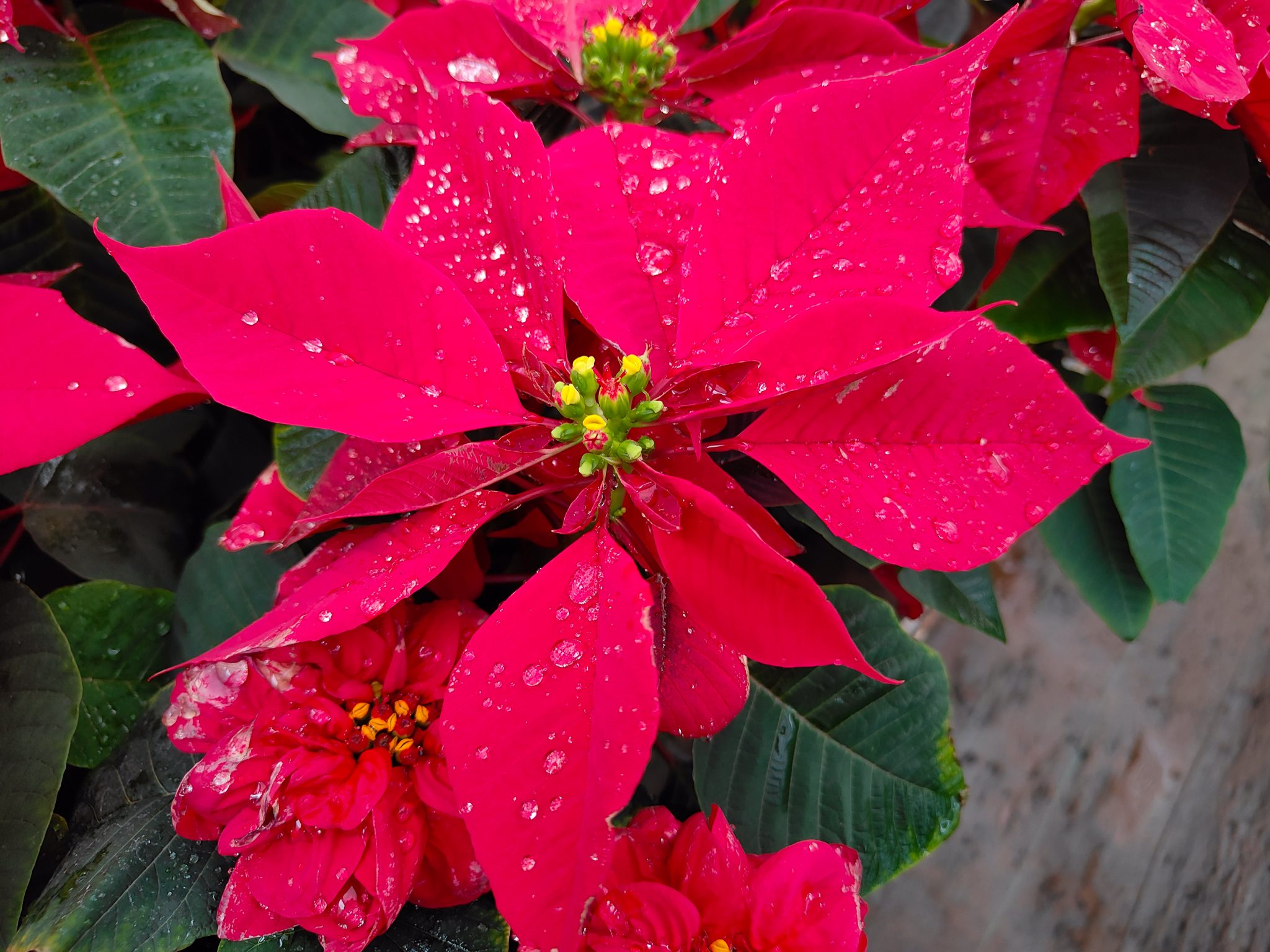
Poinsettias Should Stay Below 70 Degrees in the Daytime and Get at Least 6 Hours of Bright, Indirect Light, Clemson Extension Says
A poinsettia bought this week has to last through a December of warm, dry rooms, heating vents and short days. According to Clemson Cooperative Extension’s Home & Garden Information Center, the daytime temperature around the plant should not exceed 70 degrees Fahrenheit, and it should get at least 6 hours of bright, indirect sunlight daily. The fact sheet ties early leaf drop and faded bracts to excess heat, poor light and drafts.
Other extension services give similar ranges, with some differences on light and the exact temperature ceiling.
Why Clemson Sets a 70-Degree Ceiling
The Clemson fact sheet, by Robert F. Polomski and Nancy Doubrava with revisions by HGIC extension agent Joey Williamson, lists excess heat as one cause of leaf drop and says heat also makes the colored bracts fade early. Chilling is the problem at the other end: temperatures below 50 degrees damage the plant.
Oklahoma State University Extension ornamentals specialist Mike Schnelle recommends keeping the plant at 60 to 70 degrees. His fact sheet says temperatures of 70 degrees or below, down to 60 degrees, are desirable to retain the best bract color. He said a well-chosen plant should stay attractive for at least eight weeks indoors.
Mississippi State University Extension, in a publication by Jim DelPrince, Christine Coker and Caitland McLeod Jackson, sets a slightly higher daytime range of 68 to 72 degrees, with nights around 60 to 65 degrees. It advises against letting temperatures drop below 50 degrees, the point at which plants may show stress.
The cold limit matters before the plant even reaches the house, a point covered in an earlier article on why poinsettias carried outside unwrapped below 50 degrees can be damaged.
Six Hours of Bright Light, Without Harsh Sun
Clemson says the plant needs at least 6 hours of bright, indirect sunlight daily. Direct sun may fade the bracts, so if it cannot be avoided, the fact sheet suggests filtering it with light shade or a sheer curtain.
Mississippi State also recommends a bright spot with indirect light. It says direct sun is tolerated but raises watering needs, and the flowers will not last as long. UF/IFAS Gardening Solutions says poinsettias grow best in well-lit areas, but direct sun or hot lights can dry them out.
Oklahoma State takes a stronger view of light, calling for 6 to 8 hours of direct natural or artificial light, with at least 75 foot-candles where possible. Schnelle said insufficient light causes leaves to fall before the bracts do. Across all four extension services, a dim corner is the wrong place for a poinsettia.
Drafts, Vents and Cold Windows
Clemson advises keeping the plant away from drafts, excessive heat and dry air from appliances, fireplaces or ventilating ducts. Schnelle warned against cold drafts and heat from ducts or large incandescent lamps, and said leaves should be kept away from windows because cold glass may injure the plant. Mississippi State similarly says bracts should not touch cold windowpanes and plants should stay away from HVAC vents and heaters.
In a column for UF/IFAS Extension Bay County, Julie McConnell recommended a brightly lit room where temperatures do not fall below 65 degrees, away from drafts and drying air flow such as heating vents. UF/IFAS Gardening Solutions adds that slightly humid air helps prolong color and life span, and suggests misting or setting plants on gravel trays.
Watering and the Decorative Wrap
Overwatering is the other common way holiday poinsettias fail. Mississippi State calls it a major cause of early leaf and bract drop. Clemson advises keeping soil moderately moist, watering thoroughly when the surface feels dry, and never letting the plant sit in standing water or dry out completely.
The decorative foil or pot cover is often where water collects. Clemson recommends removing the plant from its cover before watering and letting water drain from the hole. Schnelle suggested punching a hole in the foil beneath the pot so excess water can escape, and Mississippi State says to make drainage holes in decorative wraps or remove them. It also notes that plants in 4-inch pots dry out faster than those in 6- or 8-inch pots.
Clemson and Mississippi State both say not to fertilize while the plant is in bloom. UF/IFAS notes that poinsettias can hold their color until March if they are not exposed to freezing temperatures. Plants kept past the holidays can be brought back into color the following fall, as described in an earlier piece on the darkness schedule University of Illinois Extension recommends for rebloom.
This article was produced with AI assistance and edited for accuracy against the sources linked above.